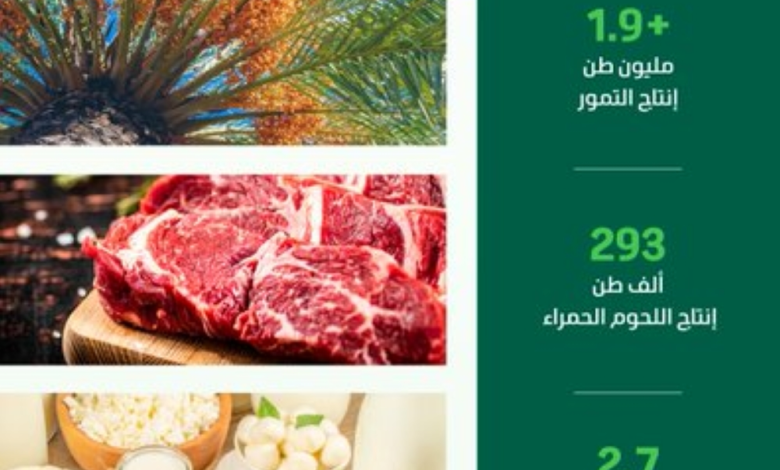

In a move reflecting the success of national food security strategies, the Ministry of Environment, Water and Agriculture announced a new record in the livestock sector, with red meat production 293,000 tons. This achievement coincides with the start of the holy month of Ramadan and is part of the "Our Land's Bounty" which aims to promote the consumption of national products and raise awareness of their high quality.
Enhancing food security and self-sufficiency
This substantial figure clearly demonstrates the rapid development of the agricultural and livestock sectors in the Kingdom of Saudi Arabia. This surge in production is a direct result of the Ministry's expansion plans aimed at reducing reliance on imports and achieving higher levels of self-sufficiency in strategic food commodities. Providing these large quantities during peak consumption seasons such as Ramadan is a cornerstone for ensuring price stability in local markets and efficiently and reliably meeting increased demand.
Supporting the local economy and livestock breeders
The impact of this achievement extends beyond simply providing food; it encompasses significant economic and developmental dimensions. Increased local production translates into direct support for small-scale farmers and investors in the livestock sector across the Kingdom. The "Our Land's Bounty" campaign acts as a bridge between producers and consumers, highlighting the competitive advantage of Saudi produce in terms of freshness and quality, thereby stimulating the local economy and creating sustainable employment opportunities in rural and agricultural areas.
High nutritional value for those fasting
From a health and nutritional standpoint, locally sourced red meat is particularly important during Ramadan. It is an exceptional source of high-quality protein, essential for the body to compensate for the long hours of fasting and for muscle building. Furthermore, local products are subject to rigorous veterinary inspection, ensuring their safety and freedom from disease.
These meats are rich in a range of vital vitamins and minerals, most notably:
- Vitamin B12: Essential for the health of the nervous system and the formation of red blood cells.
- Zinc: which plays a pivotal role in accelerating wound healing and boosting immunity.
- Iron: which protects against anemia and provides the body with the energy needed to perform religious duties and daily activities.
- Selenium: It is a powerful antioxidant that protects cells and supports thyroid function.
Alignment with the Kingdom's Vision 2030
This expansion in local production falls under the umbrella of the Kingdom's Vision 2030 , specifically the National Transformation Program, which focuses on the sustainability of vital resources and ensuring developmental and food security. Through developing the production system and improving supply chains, the Ministry seeks to build a resilient food system capable of meeting global challenges, thus solidifying the Kingdom's position as a leading nation in managing its natural resources and providing healthy and safe food for its citizens and residents.