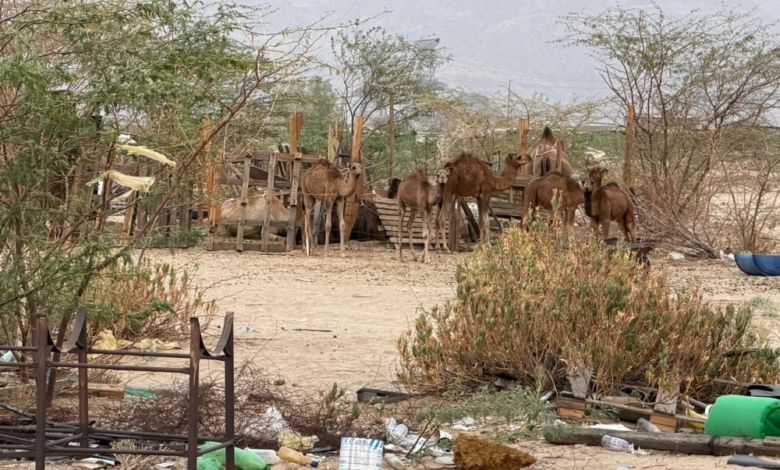
Campaigns to curb the unregulated sale of camel milk at the entrances to Mecca

In a move aimed at enhancing public health standards and ensuring food safety in the Holy City of Mecca, the Ministry of Environment, Water and Agriculture's office in Mecca, in cooperation with the city's police, has intensified its field inspection campaigns to combat the unregulated sale of camel milk at the city's entrances. These efforts are part of a commitment to protecting the health of citizens, residents, and visitors to the Holy Mosque from potential health risks.
Cultural background and health risks
Camel milk, known as “white gold of the desert,” holds a deep cultural and heritage significance in Saudi Arabia and the Gulf region, where it is considered a nutrient-rich food source. However, consuming it without pasteurization or handling it in unsanitary conditions, as is often done by street vendors, poses a significant risk. Global health organizations, including the World Health Organization and the Saudi Ministry of Health, have repeatedly warned that raw milk can be a vector for transmitting serious animal-to-human diseases, most notably Middle East Respiratory Syndrome (MERS-CoV), which has been linked to direct contact with camels, as well as brucellosis (Malta fever), a bacterial infection that can cause long-term health complications.
Details of the field campaign
The inspection campaign targeted several key locations frequented by unlicensed vendors along the roads leading to Mecca, including areas such as Amq, Qahwat al-Jabal, and the Shu'aibah Road, extending to al-Qattan and the Laith Road. The inspections resulted in the confiscation of quantities of milk and selling equipment that violated established health regulations. These street vendors lacked even the most basic hygiene and refrigeration requirements, making their products a breeding ground for microbes.
Official confirmation of continued efforts
The director of the ministry's office, Dr. Mohammed bin Abdullah Al-Hutairshi, explained that these campaigns fall under the action plan of the "Committee for Combating Unregulated Sales," which aims to curb illegal practices and their negative impact on public health and the city's aesthetic appeal. Al-Hutairshi emphasized the continuation of inspection tours and the application of legal measures against violators, stressing that the ultimate goal is to ensure food safety and protect consumers from any potential harm, especially in a city of global religious significance that receives millions of visitors annually.
Importance and expected impact
These measures are of paramount importance in Mecca, given its status as a destination for millions of pilgrims from around the world. Ensuring the safety of food products not only protects the local population but also extends to the pilgrims themselves, reflecting the Kingdom's commitment to providing them with a healthy and safe environment and enhancing its international reputation for efficiently managing crowds and major religious events.