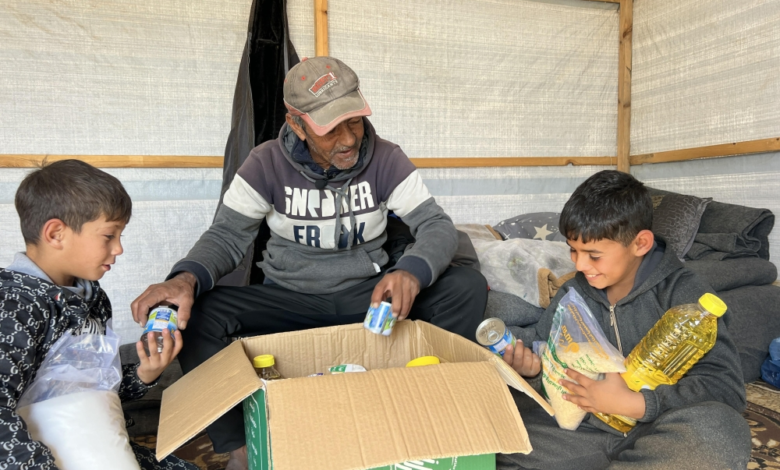
Saudi aid to Gaza: King Salman Center distributes food baskets to displaced people

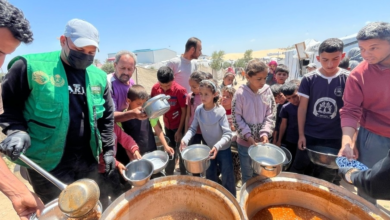
continues The King Salman Humanitarian Aid and Relief Center its tireless efforts to provide assistance to the Palestinian people in the Gaza Strip, as part of the ongoing Saudi relief effort aimed at alleviating the unprecedented humanitarian crisis in the Strip. In its latest field operations, the Center's teams distributed new quantities of urgent food aid to displaced people in southern Gaza.
Direct field distribution to displaced persons
Field teams from the Saudi Center for Culture and Heritage, the implementing partner of the King Salman Humanitarian Aid and Relief Center in the Palestinian territories, successfully reached displaced persons camps and distributed comprehensive food baskets to families living in tents. This initiative comes in response to the urgent need for food amidst a severe shortage of basic supplies, with teams working around the clock to ensure aid reaches the most vulnerable groups.
The Saudi popular campaign: a historical and humanitarian context
This aid comes as an extension of the Saudi popular campaign to aid the Palestinian people in the Gaza Strip, launched by the Custodian of the Two Holy Mosques, King Salman bin Abdulaziz Al Saud, and His Royal Highness Crown Prince Mohammed bin Salman bin Abdulaziz, Deputy Prime Minister. This campaign reflects the deep historical and fraternal ties that bind the Kingdom to Palestine, as Saudi Arabia has consistently been at the forefront of countries supporting the Palestinian cause throughout its history, whether through political, economic, or direct humanitarian support.
The humanitarian crisis in Gaza is worsening
These relief interventions are of paramount importance at present, given the dire living conditions faced by the residents of the Gaza Strip. The ongoing conflict has displaced hundreds of thousands of families, resulting in the loss of homes and livelihoods, as well as significant damage to infrastructure. With the onset of winter and the intensifying cold, the need for food, shelter, and clothing is increasing, making the role played by the King Salman Humanitarian Aid and Relief Center a lifeline for many affected families.
Saudi Arabia's leadership in humanitarian work
The Kingdom's efforts are not limited to food distribution; they have also included establishing air and sea bridges that have transported thousands of tons of medical, shelter, and food aid since the beginning of the crisis. This ongoing action embodies the Kingdom of Saudi Arabia's leading role in international humanitarian work and its unwavering moral commitment to Arab and Muslim peoples, thus reaffirming its position as one of the world's largest donors of humanitarian aid.