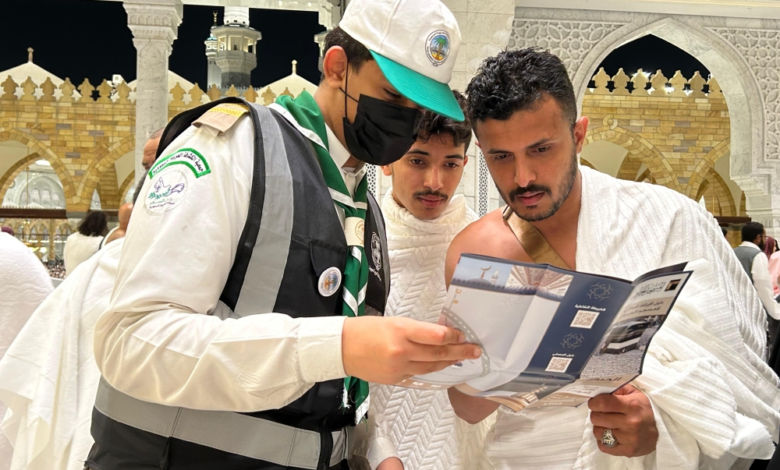

Young Saudi scouts to set outstanding examples of volunteer work at the Grand Mosque in Mecca. Participants in the Ramadan Service Camp, overseen by the Saudi Arabian Scouts Association, are providing exceptional services to pilgrims. This year, their efforts focus on utilizing advanced skills in reading the spatial maps issued by the General Presidency for the Affairs of the Two Holy Mosques, ensuring the smooth flow of crowds and facilitating the pilgrims' experience.
Map reading and crowd management skills
The scouts demonstrate a high level of field proficiency in utilizing these detailed maps to guide pilgrims and worshippers with pinpoint accuracy. These maps include up-to-date information on the locations of essential services within the Grand Mosque and its outer courtyards, including main entrances and exits, assembly points, restrooms, escalators, and elevators designated for the elderly and people with disabilities. This service is a cornerstone of crowd management, contributing to reducing congestion and directing human flow to less crowded areas.
A historical legacy in serving pilgrims and Umrah performers
These efforts are not a recent development, but rather an extension of the long and distinguished history of Saudi scouts serving the Two Holy Mosques. For decades, the name of the Saudi scout has been synonymous with the Hajj and Umrah seasons, during which these scouts have accumulated unique and cumulative experience through fieldwork in the holy sites (Mina, Arafat, and Muzdalifah). The scouts are known for their excellence in the pre-season field surveys, where they gather information and update maps to ensure their accuracy, making them the primary resource for guiding lost pilgrims and helping them reach their destinations with ease.
Professional training and readiness
Scout leaders explained that mastering map reading and coordinates is a fundamental skill that receives intensive training from the earliest stages of the scouting movement. Participating teams undergo specialized courses in topography and public relations, enabling them to provide assistance to pilgrims with exceptional speed and accuracy. This complete readiness of volunteers in the field reflects the association's commitment to providing services befitting the sanctity of the time and place.
Strategic importance and integration of efforts
These efforts are of paramount importance given the increasing number of pilgrims and visitors, and are in line with the objectives of the Kingdom's Vision 2030 and the Guests of God Service Program, which aims to enrich and facilitate the religious experience. These initiatives embody exemplary integration between government agencies responsible for serving the Two Holy Mosques and the voluntary sector, striving to enhance the experience of pilgrims and worshippers and enable them to perform their religious duties in an atmosphere of tranquility, peace, and ease.