New Al-Jawf Signs Policy: Banning Flickering and Combating Visual Distortion

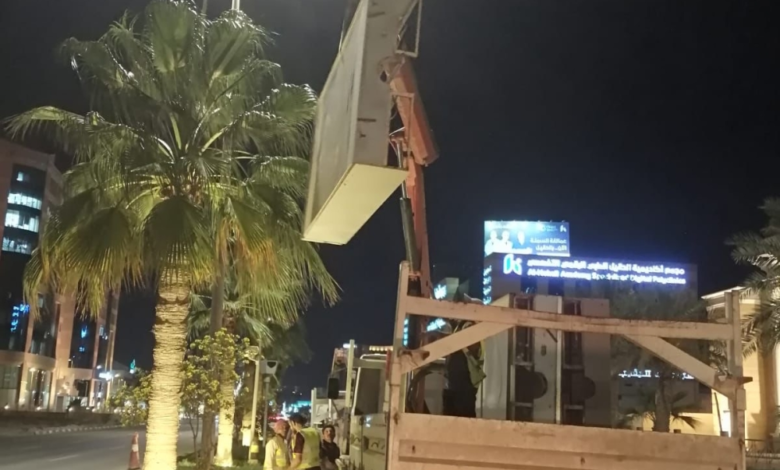
In a move aimed at enhancing quality of life and improving the urban landscape, the Strategic Development Office of Al-Jawf Region launched a comprehensive policy to regulate the identities of illuminated and unilluminated commercial signs. This initiative is part of a broader national context aligned with the objectives of the Kingdom's Vision 2030, specifically the Quality of Life Program, which prioritizes addressing visual pollution to transform Saudi cities into attractive and human-friendly urban environments.
Comprehensive urban and development context
This regulation is not merely a routine administrative procedure, but rather a qualitative shift in how public spaces are managed in the Al-Jawf region. With the urban expansion and commercial growth witnessed in Sakaka and the region's governorates, the urgent need arose to regulate the haphazard placement of billboards, which has been negatively impacting the visual identity. The new policy is based on international benchmark studies that confirm that visual harmony enhances the psychological well-being of residents, increases the economic value of commercial establishments, and encourages tourism investment by highlighting the city's architectural beauty instead of obscuring it with inconsistent signs.
Area classification: A detailed planning perspective
The Strategic Office explained that the new policy is based on dividing the Al-Jawf region into three main zones, each with its own characteristics and technical requirements, namely:
1. Commercial areas: vibrant with aesthetic controls
These areas are considered the economic heart of the city, and include major thoroughfares such as King Abdulaziz Road. While illuminated signs are permitted here, strict regulations have been imposed
- Banning flashing lights: Prohibiting the use of flashing lights or annoying “flashes” that distract attention and harm traffic safety.
- Materials and colors: Prefer to use treated wood, matte metal, and matte acrylic, while avoiding cheap plastic or bright neon colors.
- Consistency: Uniformity of panel heights and projections to ensure a comfortable visual line for the eye.
2. Administrative areas: The prestige of the place
These areas include government headquarters such as the Emirate, the Secretariat, and administrative complexes. The policy here focuses on:
- Prohibiting purely commercial signs to maintain the official character.
- Allowing quiet, unlit (or very dimly lit) directional signs that are appropriate to the dignity of government institutions.
- Adopting dignified Arabic fonts and neutral colors that reflect seriousness and order.
3. Historical areas: The authenticity of heritage
Given Al-Jawf's rich historical heritage, such as Zaabal Castle and the old markets, the policy has set very special standards for this area:
- A complete ban on electronic screens and modern illuminated panels.
- Using natural materials (stone, wood) that harmonize with the traditional urban fabric.
- The signs should be informative and educational, serving visitors and tourists without visually distorting the historical monument.
Expected impact: An attractive investment and tourism environment
This regulation is expected to contribute to creating a distinctive visual identity for the Al-Jawf region, reflecting its unique "Northern Najd" character. Adherence to these standards will also foster fair competition among businesses, shifting the focus from competition over the size and lighting of signs to the quality of service and products that attract visitors. Furthermore, this approach will enhance the region's appeal as a tourist destination, as visitors prefer locations that preserve their identity and offer a comfortable and authentic visual experience.