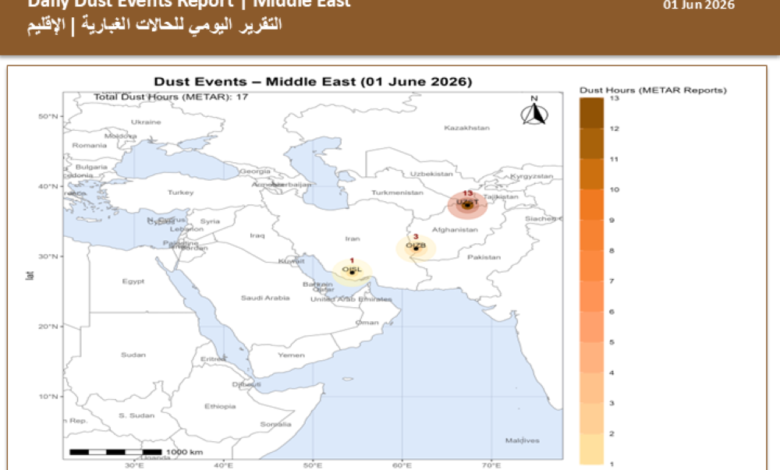

أعلن المركز الإقليمي للعواصف الغبارية والرملية عن استقرار الأجواء في المملكة العربية السعودية وخلوها من أي تأثيرات مناخية مقلقة، في الوقت الذي رصد فيه نشاطاً ملحوظاً للعواصف الترابية في أجزاء من آسيا الوسطى والشرق الأوسط. وكشف تقرير المركز الأخير عن تسجيل 17 ساعة من الظواهر الغبارية خلال الساعات الماضية، تركزت بشكل أساسي في جمهوريتي أوزبكستان وإيران، مما يسلط الضوء على التباين المناخي الواضح في المنطقة وأهمية المراقبة المستمرة للغبار العابر للحدود.
تفاصيل الرصد الإقليمي للظواهر الغبارية
استناداً إلى بيانات محطات الرصد الجوي المعتمدة، أوضح المركز أن النصيب الأكبر من النشاط الغباري كان من نصيب جمهورية أوزبكستان، التي سجلت 13 ساعة غبارية متواصلة عبر محطة «UZST». وتلتها الجمهورية الإسلامية الإيرانية التي شهدت 4 ساعات من النشاط الغباري، توزعت بواقع ثلاث ساعات في محطة «OIZB» وساعة واحدة رُصدت في محطة «OISL». وأكد التقرير عدم تسجيل أي حالات مشابهة في بقية دول الإقليم خلال فترة الرصد ذاتها، مما يشير إلى أن تأثير هذه الموجة كان محصوراً جغرافياً.
ما وراء الأرقام: فهم طبيعة العواصف في المنطقة
تُعد منطقة الشرق الأوسط وآسيا الوسطى من أكثر المناطق تأثراً بالعواصف الرملية والغبارية على مستوى العالم، وذلك لطبيعتها الجغرافية التي تضم مساحات صحراوية شاسعة، مثل صحراء كاراكوم وصحراء لوط. وتنشأ هذه العواصف عادةً نتيجة للرياح القوية التي تهب على التربة الجافة والمفككة، حاملة معها كميات هائلة من الرمال والغبار لمسافات طويلة. وتتفاقم هذه الظاهرة بفعل عوامل متعددة أبرزها التغير المناخي الذي يؤدي إلى ارتفاع درجات الحرارة وزيادة موجات الجفاف، إلى جانب الأنشطة البشرية مثل الرعي الجائر وتدهور الغطاء النباتي، مما يساهم في زيادة وتيرة وشدة هذه العواصف.
التأثيرات العابرة للحدود: من الصحة إلى الاقتصاد
لا تقتصر تأثيرات الظواهر الغبارية على المناطق التي تنشأ فيها، بل تمتد لتشمل دولاً مجاورة، مسببةً تحديات صحية وبيئية واقتصادية. فعلى الصعيد الصحي، تزيد الجسيمات الدقيقة العالقة في الهواء من مخاطر الإصابة بأمراض الجهاز التنفسي والحساسية. اقتصادياً، تؤدي هذه العواصف إلى تدني مدى الرؤية الأفقية، مما قد يتسبب في تعطيل حركة الملاحة الجوية والبرية، فضلاً عن تأثيرها السلبي على القطاعات الزراعية والبنية التحتية. ويؤكد المركز الإقليمي استمراره في تكثيف أعمال المتابعة اليومية لهذه التقلبات، بهدف دعم منظومات الإنذار المبكر ورفع جاهزية الدول للتعامل مع التداعيات الجوية الطارئة وحماية الأرواح والممتلكات.