Saudi Arabia regulates the exploitation of space resources with a fee of 100,000 riyals

In a strategic move aimed at securing a leading position in the global space economy, the Saudi Arabian Communications, Space and Technology Commission (CSTC) has released a comprehensive draft regulation through its "Istilaa" platform, establishing the legislative framework for space exploration and resource utilization. This step aims to regulate the extraction, ownership, and trade of resources from celestial bodies, while also setting operational fees of up to 100,000 riyals, reflecting the Kingdom's commitment to regulating this emerging and vital sector.
National context towards economic diversification
These regulations cannot be viewed in isolation from the broader context of Saudi Vision 2030, which primarily aims to diversify national income sources and reduce dependence on oil. The space sector is a cornerstone of the future economy, and through these regulations, the Kingdom seeks to create an attractive and secure investment environment for both local and international companies. These regulations establish a new phase in which the Kingdom moves from simply participating in space research to actively engaging in the "space economy" and space mining, a global market expected to be worth trillions of dollars in the coming decades.
Details of ownership and investment rights
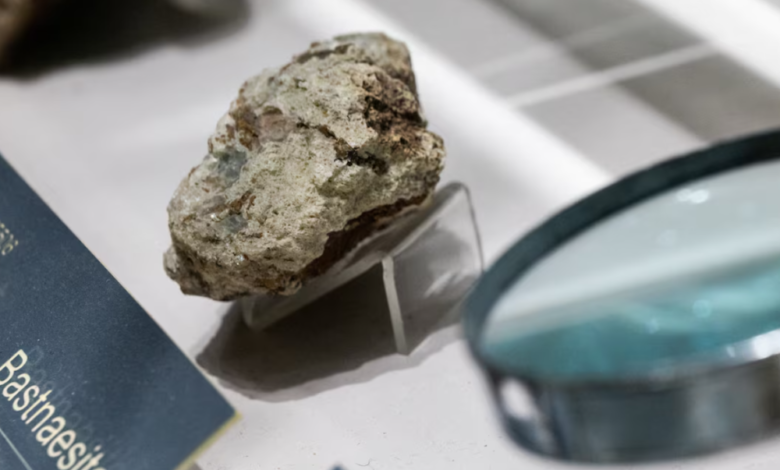
The new regulations granted investors and licensed entities broad and unprecedented powers, including the right to exploit and process resources found on celestial bodies, both in space and after their return to Earth. The Authority went further, opening the door to a full range of commercial activities encompassing the storage, transport, distribution, sale, purchase, and even export of these resources. Granting ownership rights to licensees is a pivotal turning point that enhances the attractiveness of the Saudi space sector for bold investments, as legislative ambiguity surrounding ownership rights is considered one of the biggest obstacles globally in this field.
Financial and licensing fees structure
The authority established a clear financial structure for licenses to ensure the seriousness and financial solvency of operators, and the most prominent fees are as follows:
- 100,000 riyals: Fees for licensing activities to exploit space resources, which is the same amount specified for space monitoring and tracking licenses.
- 100,000 riyals: Fees for operating a multi-satellite system, or launching unmanned orbital vehicles, as well as for manned flights and capsule operation.
- 30,000 riyals: fees for operating one spacecraft, and fees for building spaceports (while the operating fees are 100,000 riyals).
- Two thousand riyals: symbolic fees for tests and experiments, permits for support flights and sonic rockets, as an encouragement for scientific research.
Strict commitments to environmental protection and security
In addition to investment incentives, the Authority has established stringent conditions to ensure operational safety. Operators are required to submit a comprehensive risk assessment and a clear plan for reducing space debris, aligning with international trends in space sustainability. Regulations also emphasize isolation and decontamination procedures for re-entry of resources to prevent any adverse biological contamination that could harm the terrestrial environment. The Authority further requires that the intention to own the resources be declared in the license application, along with the submission of data supporting scientific awareness and the provision of samples of extracted resources for research and monitoring purposes.
Expected impact and international dimension
These regulations are expected to position the Kingdom as a leader in space legislation, enhancing its competitiveness regionally and internationally. By providing a transparent and clear regulatory environment, Saudi Arabia will be able to attract entrepreneurs and major technology companies specializing in space technologies, creating high-quality job opportunities and supporting the localization of advanced technologies within the Kingdom.