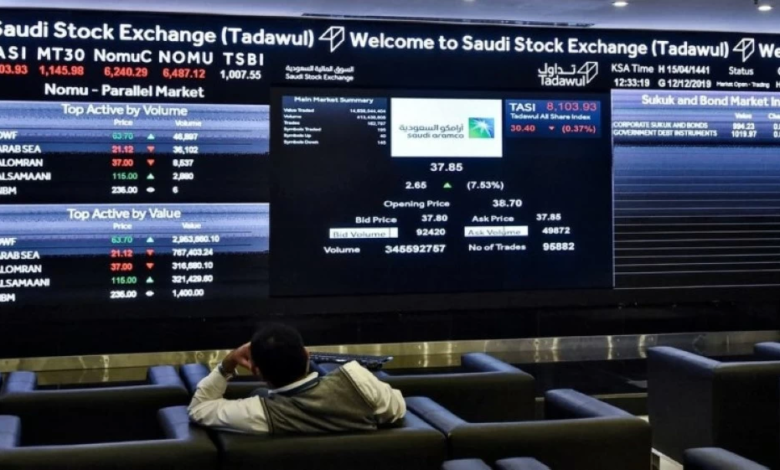
Opening the Saudi financial market to foreigners: Economic implications and dimensions

The decision to open the Saudi financial market (Tadawul) to all categories of foreign investors constitutes a pivotal step in the development of the national economy, and a qualitative leap that moves the market from a stage of selective and conditional openness to a fully open market model, thus placing the Kingdom among the ranks of advanced financial markets globally.
Historical context and gradual path
This decision was not made on a whim, but rather the culmination of a long process of structural and regulatory reforms undertaken by the Saudi financial market in recent years. The Kingdom began gradually opening its market through the Qualified Foreign Investor (QFI) program in 2015, followed by the inclusion of the Saudi market in emerging market indices such as MSCI, FTSE Russell, and S&P. According to a report published by Al Arabiya.net, this current step reflects not merely a regulatory adjustment, but rather indicates a high level of market maturity, the confidence of regulatory bodies in their oversight structure, and its capacity to absorb long-term global capital.
An open economy and Vision 2030
Opening the Saudi market to foreign investors carries broader implications than just the financial sector. It reflects the Kingdom's commitment to building an open economy, attractive to global capital, and based on transparency and good governance. This approach aligns perfectly with the objectives of Saudi Vision 2030 , specifically the Financial Sector Development Program, which aims to enhance the role of the financial market in supporting economic growth, diversifying income sources away from oil, and establishing the Saudi market as a regional and global investment hub.
Deepening integration and financial stability
With the elimination of frameworks that allowed indirect exposure to equities (such as swap agreements), foreign investors have become active participants in the market, not merely beneficiaries of returns, thus deepening the integration between the Saudi market and global financial markets. This decision is expected to broaden and diversify the investor base by attracting global investment institutions, sovereign wealth funds, and pension funds seeking stable markets with strong economic growth. This diversification reduces reliance on short-term or speculative liquidity, enhances trading stability, and mitigates the volatility often associated with individual speculation.
Pricing efficiency and governance
The presence of institutional foreign investors directly enhances the efficiency of stock pricing. These investors typically rely on rigorous fundamental analysis, operational performance assessments, and governance quality, rather than on momentum or rumors. Consequently, prices become more representative of companies' fair value, thus supporting market fairness and transparency. This phase presents a positive challenge for listed companies, as the level of financial disclosure, the quality of reporting, and management efficiency will become crucial factors in attracting foreign investment, prompting companies to raise their governance standards and improve operational performance.
Attractive sectors and promising opportunities
The market opening comes at a crucial time, offering promising investment opportunities following periods of price correction that have made stock valuations attractive compared to regional and global markets. Sectors with strong fundamentals are expected to attract the attention of foreign investors, most notably the banking sector, which enjoys robust capital adequacy under the supervision of the Saudi Central Bank, as well as the petrochemicals, telecommunications, and healthcare sectors, which boast sustainable growth and clear business models aligned with the Kingdom's population and economic expansion.