The Saudi stock market index declined, with trading volume reaching 2.9 billion riyals

Saudi stock market index closes: Slight decline amid billion-dollar trading volume
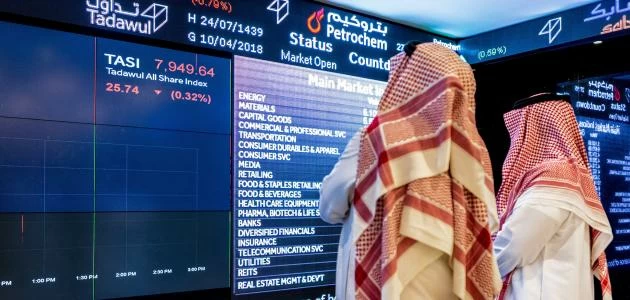
The Saudi stock market saw a slight decline in its main index today, with the general index falling by a marginal 6.64 points to close at 10,886.63 points. This closing was accompanied by active trading, with total value of transactions reaching approximately SAR 2.9 billion, reflecting continued liquidity and investor reaction to current economic data and company financial results.
Trading activity and performance of listed companies
According to data published in the Saudi Press Agency's daily economic bulletin, the total volume of shares traded on the Saudi stock market approximately 152 million shares. The session saw mixed performance among companies, with 109 companies recording varying increases in value, while 148 companies closed lower, reflecting a state of relative equilibrium and selective speculation in the market.
Regarding individual stock performance, shares of pharmaceutical companies (Dawaeia, Kemanol, Shaker, Abu Moati, and Dar Al-Madaat) topped the list of gainers. Conversely, shares of Modern Mills, Fish, Manufacturing, Amiantit, and Emaar led the decliners. The percentage changes for these companies ranged between 8.11% and 5.38%, indicating diverse investment opportunities within the trading session.
Most actively traded stocks in the market
Regarding the most actively traded stocks by volume, shares of Americana, Saudi Aramco, Alinma Bank, Petro Rabigh, and Saudi Chemical Company accounted for the largest share of trading volume. In terms of monetary value, liquidity was primarily concentrated in the leading companies with significant weighting in the index, namely Saudi Aramco, Alinma Bank, Al Rajhi Bank, Ma'aden, and Saudi Telecom Company (STC). These companies often drive market trends and attract institutional investors.
Parallel market performance (growth)
On the other hand, the Saudi Parallel Market Index (Nomu) showed positive performance, closing up 68.42 points to settle at 22,438.82 points. Trading value in the parallel market reached approximately SAR 28 million, with 1.8 million shares traded, reflecting the growing interest in emerging and medium-sized companies, which represent the backbone of future growth.
Economic context and importance of the Saudi stock market
The Saudi stock market is the largest and most liquid in the Middle East and North Africa region, and plays a pivotal role in achieving the goals of the Kingdom’s Vision 2030. The vision aims to deepen the financial market, diversify national income sources away from total dependence on oil, and attract direct and indirect foreign investments by improving the regulatory and legislative environment.
Historically, the market witnessed a qualitative leap with the listing of Saudi Aramco, the largest initial public offering in the history of global financial markets, which strengthened the Saudi market's position on the global stage. Furthermore, the market's inclusion in global emerging market indices such as MSCI and FTSE Russell has significantly contributed to the influx of billions of dollars from both passive and active foreign investment funds.
Regionally and internationally, the Saudi market is influenced by multiple macroeconomic factors, including global oil prices, central bank interest rate decisions, and inflation rates. However, the Saudi economy has demonstrated remarkable resilience in the face of global challenges, bolstered by continued government spending on major development projects and the rapid growth of the non-oil private sector, making the Saudi financial market an attractive and stable investment destination.