
Exceptional resilience in the face of geopolitical crises
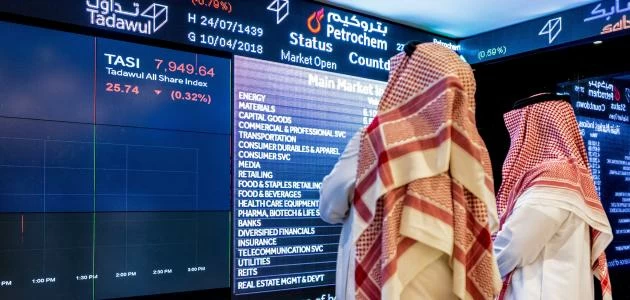
Amid escalating tensions in the Middle East, the Saudi stock market remarkable resilience, with the general index recording a significant increase of 2.22% since the beginning of this month. This rise not only reflects the strength of the Saudi economy but also underscores the market's status as a safe haven for investors during times of crisis, outperforming its counterparts in other Gulf markets that have suffered heavy losses due to the risks of military escalation.
Performance varied among Gulf markets
Data revealed a sharp divergence in the response of regional financial markets to current events. While Saudi stocks maintained their upward trajectory, neighboring markets experienced steep declines; the Dubai Financial Market index fell by more than 18%, while the Abu Dhabi index lost over 13%. This divergence is attributed to the economic structure of each market; markets heavily reliant on tourism and foreign direct investment are typically more sensitive to security tensions, while those supported by the energy and petrochemical sectors benefit from rising commodity prices.
Economic factors supporting the Saudi market
This surge didn't happen in a vacuum; it was built on solid economic foundations. The most prominent of these factors was the attractive price-to-earnings ratio of listed companies, which encouraged strategic investment rotation. Furthermore, the Kingdom's credit rating affirmation by international agencies played a pivotal role in bolstering the confidence of financial institutions, underscoring the success of the structural reforms within Saudi Vision 2030 in diversifying the economy and strengthening its foundations.
Oil prices and the impact of the energy sector
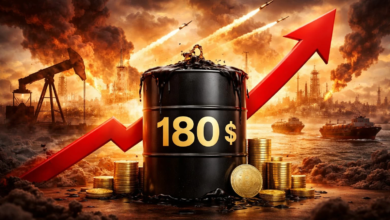
Historically, military tensions in the Middle East have been linked to higher energy prices, which positively impacts the revenues of exporting countries. In recent trading, Brent crude jumped 2.5% to $105.72 a barrel, while West Texas Intermediate crude surpassed the $100 mark. The Saudi energy sector has directly contributed to stabilizing the financial market, as the profits of energy companies offset any declines in other sectors.
Geopolitical context: The Kharg Island crisis and its repercussions
Traders are currently assessing the geopolitical risks following the dangerous developments of Tehran's retaliatory attacks on Israel and Arab states in response to the US targeting of military sites on Kharg Island. Kharg Island holds immense strategic and historical importance, serving as the nerve center of Iran's oil sector and handling the majority of Iran's oil exports to the world. Any threat to these facilities evokes memories of major energy crises and threatens to disrupt global supply chains.
Expected impact at the regional and international levels
Domestically, high oil revenues are expected to support government spending on major development projects in Saudi Arabia. Regionally, these tensions may prompt investors to restructure their portfolios and shift their focus to markets less vulnerable to shocks. Internationally, the persistence of oil prices above $100 raises serious concerns about escalating global inflation, which could force major central banks to reconsider their monetary policies and interest rates in the near term.