
The Saudi Ministry of Education has announced comprehensive and updated details of the Student Assessment Regulations for the 2025 academic year (1447 AH), which include significant changes aimed at enhancing the efficiency of the educational process and ensuring the quality of learning outcomes. This step comes in response to the current phase's requirements, which focus on equipping students with essential skills, particularly in the foundational stages.
Final exams for primary grades return
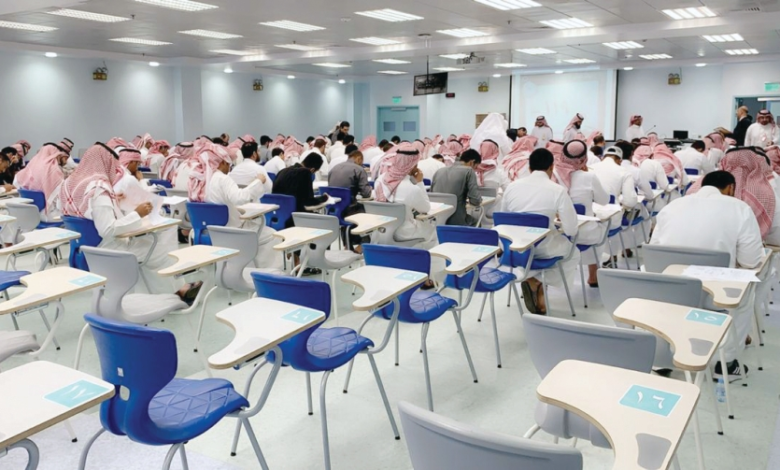
In a significant change aimed at enhancing academic achievement, the new regulations stipulate a final assessment in mathematics and Arabic for first and second grade students, as well as for first-year students in continuing education programs. This step represents a shift from the previously used system of absolute continuous assessment, as the Ministry aims to ensure students master essential reading, writing, and arithmetic skills before progressing to higher grades.
As for the rest of the school grades, the scope of the final assessment has been expanded to include mathematics, Arabic language, English language, Chinese language, and science, while the formative (continuous) assessment will continue to be applied in the rest of the school subjects.
Development context and the goals of Vision 2030
These changes are part of a broader effort to develop the Kingdom's education system in line with the goals of Saudi Vision 2030 and the Human Capital Development Program. The Ministry aims to prepare a globally competitive generation by integrating Chinese into final exams and focusing on scientific and linguistic subjects. Educational experts indicate that reintroducing written exams in the early grades will help identify and address students' learning difficulties early on, thus reducing learning loss and enhancing discipline in the educational process.
Testing criteria and conditional ratios
The ministry emphasized the need for intensive focus on reading and writing skills as a prerequisite for primary school students to advance to the next grade level. Regarding the academic calendar, it was decided that final exams for each term will be held during the last week of the term, as part of the regular school day, while end-of-year and supplementary exams will take place during the last two weeks of the academic year.
One of the most important provisions of the regulations is the application of a conditional weighting (20%) of the written exam grade for subjects with a final assessment in the primary and intermediate levels, as well as in the secondary level at the end of each term. This decision ensures the student's seriousness in the final exam and prevents complete reliance on coursework grades.
E-learning and absence rules
The regulations outline a mechanism for evaluating self-learning e-learning materials through the "Noor" system, requiring students to sign a pledge form. The Ministry emphasized strict measures regarding absences, stipulating that students absent without a valid excuse will be barred from retaking quizzes and will not receive full marks for participation and class interaction, all in order to reinforce the values of discipline and responsibility.
Regarding the Holy Quran materials, the Ministry explained that the assessment will be based on the accuracy of the reading, the quality of memorization, and the understanding of the interpretation, to ensure that the student is connected to the Book of God in understanding and application, in a way that enhances Islamic values and national identity.