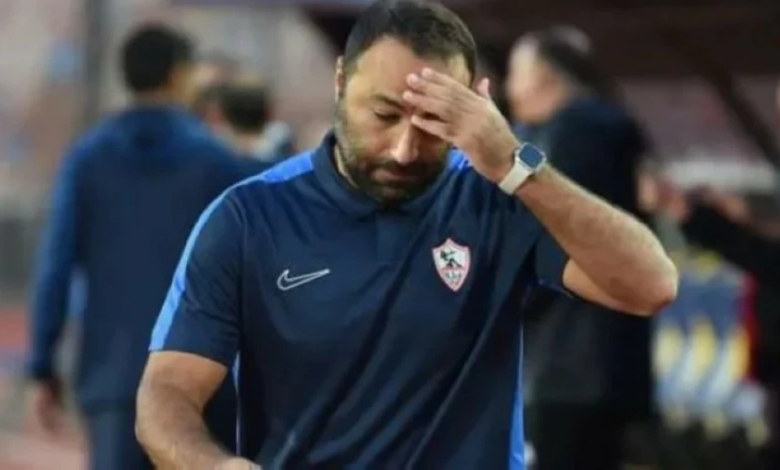

In a surprising and rapid development within the corridors of the White Castle, coach Ahmed Abdel Raouf officially announced his departure from coaching the first football team of Zamalek Club, after only two months (60 days) of taking over the technical responsibility of the team, which sparked a state of controversy in Egyptian sports circles.
Behind the scenes of the departure and the reasons for the dispute
Abdel Raouf had taken over his duties on November 1st, succeeding Belgian coach Yannick Ferrera, who was dismissed due to poor results. Despite the short time, tensions quickly surfaced between the young manager and the club's administration.
Sources indicate that the main point of contention that hastened the departure was the difference of opinion regarding the players’ files, specifically Abdul Raouf’s media statements regarding the crisis of terminating the contract of player Mahmoud Bentayj, in addition to his technical decision to exclude player Ahmed Hamdi from his plans, which the administration considered an interference in the club’s policies or a conflict with its vision, which exacerbated the tension and led to a dead end.
A touching farewell message to the fans
Abdel Raouf made sure to send a dignified farewell message via his official Instagram account, emphasizing the depth of his relationship with the White Knights, writing: “To the great Zamalek fans, today I submitted my official apology for not continuing in my role as the technical director of Zamalek Club. I am leaving my position within the club, but Zamalek will remain present in my heart and mind, a great entity that I was honored to work for and serve.”.
He added in his statement: “My love and appreciation for Zamalek Club and its fans will remain unchanged, and I will always remain a supporter and loyal to this prestigious institution, at all times and under any circumstances. Thank you to the entire team I had the honor of working with, thank you to the players and the medical and administrative staff, and there is nothing more to say. Thank you to the loyal fans of Zamalek Club.”.
General context: Technical instability at the White Castle
This news reopens the debate surrounding Zamalek's recurring issue of managerial instability, a problem that has consistently negatively impacted the team's performance in both domestic and continental competitions. Changing coaches mid-season is a double-edged sword, often placing players under immense pressure to adapt to different coaching styles in a short period.
Zamalek is one of the giants of Egyptian and African football, and its vast fan base always aspires to compete for all titles. Therefore, the coach's departure after such a short period presents the board with a significant challenge: quickly appointing a competent replacement capable of reuniting the team and continuing their journey in the league, cup, and African championships without negatively impacting player morale.
Expected impact on the team
This decision is expected to cast a shadow over the team's preparations for upcoming matches, requiring swift administrative intervention to restore calm and stability. Zamalek fans eagerly await the announcement of the new manager, hoping for an experienced and strong-willed individual capable of handling the immense pressures surrounding the Zamalek head coach position.