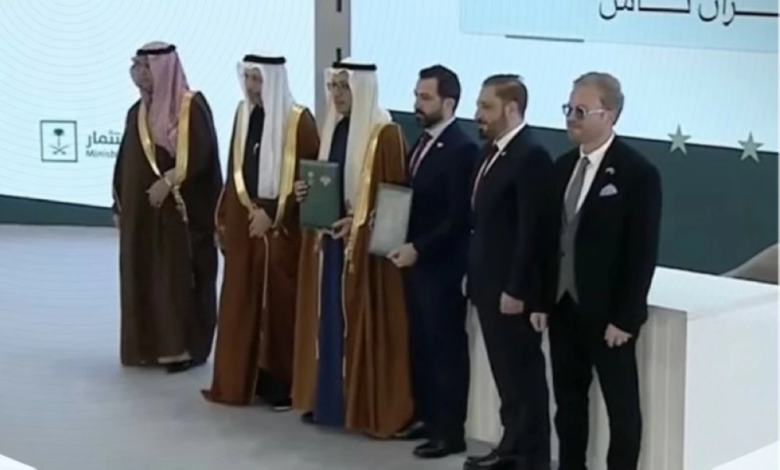

في خطوة تعكس تسارع وتيرة التطبيع الاقتصادي وتعميق العلاقات الثنائية، وقعت المملكة العربية السعودية والجمهورية العربية السورية، اليوم السبت، 5 اتفاقيات إستراتيجية شملت قطاعات حيوية متعددة، وذلك على هامش زيارة وفد سعودي رفيع المستوى إلى العاصمة دمشق.
تفاصيل الاتفاقيات الموقعة
شهدت مراسم التوقيع إبرام اتفاقيات نوعية تهدف إلى إعادة تأهيل البنية التحتية السورية وتعزيز الربط الجوي بين البلدين. وتضمنت أبرز الاتفاقيات عقد شراكة بين صندوق "إيلاف" والمؤسسة العامة للطيران المدني السوري، بهدف تطوير وتشغيل مطار حلب الدولي، مما يعد خطوة محورية لربط الشمال السوري بحركة التجارة والسفر الدولية.
كما تم الاتفاق على تأسيس شركة طيران مشتركة بين البلدين، وهي خطوة من شأنها تسهيل حركة النقل الجوي وزيادة التبادل التجاري والسياحي. وفي القطاع الصناعي، وقع الجانبان اتفاقية مع الصندوق السيادي السوري لتطوير شركة "كابلات سوريا"، بالإضافة إلى اتفاقية أخرى تهدف إلى تطوير مشاريع تحلية ونقل المياه، وهو قطاع حيوي تحتاجه سوريا بشدة في مرحلة إعادة الإعمار.
زيارة رسمية لتعزيز الاستثمار
وكان وزير الاستثمار السعودي، المهندس خالد الفالح، قد وصل إلى دمشق اليوم على رأس وفد اقتصادي، في زيارة رسمية تهدف إلى دفع الشراكات الثنائية نحو التنفيذ العملي. وأكد الفالح خلال الزيارة حرص المملكة على تعزيز التعاون الاقتصادي والاستثماري، مشيراً إلى أن هذه الاتفاقيات تمثل باكورة عمل مشترك يخدم مصالح الشعبين الشقيقين.
سياق التقارب السياسي والاقتصادي
تأتي هذه الاتفاقيات تتويجاً لمسار الانفتاح الدبلوماسي الذي شهدته العلاقات السعودية السورية مؤخراً، والذي بدأ باستئناف العلاقات الدبلوماسية وعودة سوريا لشغل مقعدها في جامعة الدول العربية. وتُعد هذه الخطوات الاقتصادية ترجمة عملية للتفاهمات السياسية، حيث تنتقل العلاقات من مرحلة التطبيع السياسي إلى مرحلة الشراكة الاقتصادية الفاعلة.
الأهمية الإستراتيجية والتأثير المتوقع
يكتسب هذا الحدث أهمية بالغة على الصعيدين المحلي والإقليمي؛ فبالنسبة لسوريا، تمثل هذه الاستثمارات شريان حياة لقطاعات البنية التحتية المتهالكة بفعل سنوات الحرب، وتفتح الباب أمام عودة رؤوس الأموال العربية للمساهمة في إعادة الإعمار. أما بالنسبة للمملكة، فإن هذه الخطوة تتوافق مع رؤية السعودية 2030 التي تهدف إلى تعزيز الاستثمارات الإقليمية وخلق بيئة اقتصادية متكاملة في المنطقة.
ومن المتوقع أن تسهم هذه الاتفاقيات في تحسين الخدمات المقدمة للمواطن السوري، لا سيما في مجالات النقل والمياه، بالإضافة إلى خلق فرص عمل جديدة وتنشيط الدورة الاقتصادية بين البلدين.