One million employees in Saudi tourism: Achievements of Vision 2030

Saudi Arabia's Minister of Tourism, Ahmed Al-Khatib, revealed a new milestone in the Kingdom's economic record, announcing that the number of employees in the tourism sector surpassed one million by the end of last year. This record number confirms the success of the strategic vision set forth in Vision 2030 , which aimed to transform tourism from a marginal sector into a major driver of economic growth and diversify national income sources, thus mitigating the volatility of energy markets.
Context of transformation: From oil dependency to economic diversification
This achievement was not a coincidence, but rather the result of well-thought-out plans that began with the launch of Saudi Crown Prince Mohammed bin Salman's Vision 2030 in 2016. Before this vision, the Saudi economy was almost entirely dependent on the oil and petrochemical industries. With the launch of the National Tourism Strategy and the opening of the Kingdom to the world through the electronic tourist visa in 2019, the Kingdom entered a completely new phase, transforming Saudi cities and heritage sites into global tourist destinations, creating a growing demand for human resources in the hospitality, entertainment, and event management sectors.
The importance of the sector at the International Labor Market Conference
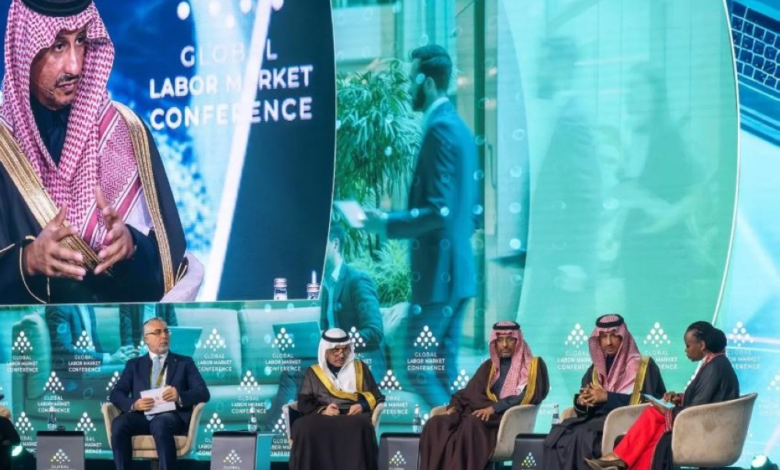
Al-Khatib's remarks came during his active participation in a panel discussion titled "High-Impact Sectors as a Driver of Job Creation," held as part of the third edition of the International Labor Market Conference in Riyadh. The minister explained that the structural transformation of the Saudi economy has allowed for the emergence of new and promising sectors such as culture, entertainment, and tourism. These sectors are characterized by their labor-intensive nature and high capacity to absorb new graduates, thus contributing directly to reducing unemployment rates.
Global indicators and unprecedented empowerment of women
The Minister reviewed the strategic importance of tourism in its global sense, citing United Nations tourism data which confirms that the sector contributes 10% to total employment and global GDP. On the local level, Al-Khatib highlighted the remarkable progress in social empowerment, noting that women now constitute 45% of the Saudi tourism workforce . He emphasized that the nature of work in this field, which relies on "soft skills" and a spirit of hospitality, aligns perfectly with the capabilities and aspirations of young Saudi men and women.
Mega-projects: The engine of future employment
Speaking about the future, the Minister of Tourism addressed the mega-projects, some of the largest in the world, such as the Red Sea Project , Qiddiya , Diriyah Gate , and NEOM . He emphasized that these destinations are not merely construction projects, but rather integrated economic systems requiring hundreds of thousands of qualified personnel to operate them according to the highest international standards. The Ministry is currently working to bridge the skills gap through intensive training programs to ensure that visitors' tourism experience has an authentic Saudi flavor and is delivered by Saudi nationals.
A qualitative leap in numbers and investment in people
Al-Khatib concluded his remarks by highlighting the rapid growth, noting that the number of jobs jumped from 750,000 to over one million, an increase of 250,000 jobs in record time. He emphasized that the government is investing heavily in human capital development programs to ensure the sustainability of this growth and improve the quality of life, thus solidifying the Kingdom's position as a leading global tourist destination.