Saudi Arabia and Tunisia discuss enhancing economic and industrial integration in Riyadh

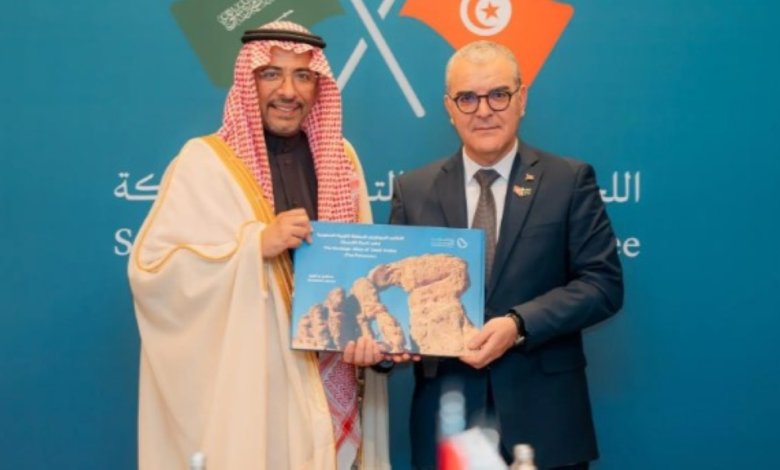
In a strategic move aimed at strengthening Arab economic ties, the Saudi capital, Riyadh, hosted the 12th session of the Saudi-Tunisian Joint Committee. On the sidelines of this session, His Excellency the Minister of Industry and Mineral Resources, Mr. Bandar bin Ibrahim Al-Khorayef, held an important meeting with His Excellency the Minister of Economy and Planning of the Republic of Tunisia, Dr. Samir Abdelhafid, to discuss ways to advance joint cooperation towards broader horizons.
Outcomes of the twelfth session of the Joint Committee
During the meeting, the two sides discussed mechanisms for enhancing economic and industrial integration between the two brotherly countries, focusing on capitalizing on available opportunities in promising sectors. The participants commended the pivotal role played by the Joint Committee, whose efforts, through the work of its teams and representatives of government entities, resulted in the inclusion of nearly 100 topics in the Committee's agenda, covering 15 vital areas of cooperation. These areas are spearheaded by strategic sectors including energy, industry, mining, logistics, trade, and human resource development, reflecting the comprehensive vision for the future of relations between Riyadh and Tunis.
The depth of historical relations and the importance of timing
These intensive discussions build upon a long and deep legacy of strong diplomatic and economic relations between the Kingdom of Saudi Arabia and the Republic of Tunisia. The Kingdom has long been a key partner and supporter of Tunisia's development for decades, through both direct investments and projects funded by the Saudi Fund for Development. This session is being held at a crucial time, as both countries seek to move their relationship from traditional cooperation to a sustainable strategic partnership that serves the interests of both nations.
Expected economic and strategic impact
This economic activity is particularly significant within the framework of Saudi Arabia’s Vision 2030, which aims to diversify income sources, boost non-oil exports, and transform the Kingdom into an industrial powerhouse and a global logistics hub. Tunisia, with its strategic location in North Africa and proximity to European markets, represents a vital gateway for Saudi exports and investments. Conversely, attracting Saudi investments and addressing the challenges faced by Saudi exporters will contribute to supporting the Tunisian economy, creating new job opportunities, and achieving sustainable development, thereby strengthening regional economic stability.
High-level attendance and seamless coordination
The meeting witnessed high-level attendance, reflecting the seriousness of both parties in removing obstacles for investors. Participants included His Excellency Dr. Abdullah Al-Ahmari, Assistant Minister of Industry and Mineral Resources for Planning and Development; His Excellency Eng. Saad Al-Khalab, CEO of the Saudi Export-Import Bank; and His Excellency Dr. Abdulaziz Al-Saqr, Ambassador of the Custodian of the Two Holy Mosques to Tunisia. Discussions also focused on supporting sectors, including transportation, the judiciary and justice system, and media, to ensure a comprehensive legislative and investment environment.