Trump announces airstrikes against ISIS in Nigeria in coordination with the government

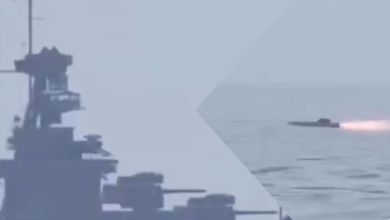
US President Donald Trump announced on Thursday that US forces had conducted a series of intensive airstrikes against ISIS strongholds in northwestern Nigeria, in a targeted military operation coinciding with Christmas Day. Trump asserted that these operations fulfilled his promise to make terrorists pay a "heavy price.".
Details of the military operation
In a post on his social media platform Truth Social, the US president explained that the Department of Defense (the Pentagon) had carried out precise and deadly strikes targeting gatherings and vital sites of the extremist organization. Trump said, "I warned these terrorists before, they would pay a heavy price, and tonight that price was paid," indicating that the operation achieved its objectives with high accuracy.
High-level coordination with Abuja
For its part, the US Africa Command (AFRICOM) confirmed in an official statement via the X platform that the airstrike was carried out "at the official request of the Nigerian authorities," reflecting the depth of security cooperation between Washington and Abuja. The command indicated that the operation resulted in the deaths of several ISIS members, representing a significant blow to the group's capabilities in the region.
In the same context, US Defense Secretary Pete Hegseth praised the readiness and rapid response of US forces, expressing his deep gratitude for the Nigerian government's support and close cooperation in making this mission a success, and affirming the United States' commitment to combating terrorism in Africa.
Security context and terrorism challenges in Nigeria
These attacks come at a time when Nigeria, Africa's most populous nation, faces complex security challenges. Since 2009, the country has been embroiled in a bloody conflict against Boko Haram and the Islamic State West Africa Province (ISWAP). The violence has recently spread to the northwest, where the activities of terrorist groups intersect with those of organized crime gangs, posing a direct threat to regional stability.
This region is a hotspot due to the weak government presence in some remote areas, which has allowed extremist groups to establish training camps and launch attacks against civilians and security forces. The recent US strike sends a strong message that the international community will not stand idly by in the face of these groups' expansion.
The political and religious dimensions of American intervention
These strikes, the first in Trump's current term in Nigeria, carry significant political implications. The Republican president had previously leveled harsh criticism at the situation in Nigeria in October and November, claiming that Christians there faced an "existential threat." This rhetoric sparked widespread controversy, with some welcoming it as support for minorities, while others warned that it could inflame religious tensions in a country long plagued by sectarian violence.
Despite the right-wing narrative in the West about religious persecution, the Nigerian government and many independent analysts refuse to confine the conflict to a purely religious framework, pointing out that the violence affects Muslims and Christians alike, and that its roots lie in complex economic, social and security reasons.
Expected regional and international impact
Strategically, this operation reflects a renewed direct US interest in counterterrorism efforts in West Africa, particularly following recent geopolitical shifts in the Sahel region and the withdrawal of Western forces from some neighboring countries. These strikes are expected to strengthen the US-Nigeria military partnership and send a deterrent message to terrorist groups seeking to exploit the security vacuum in the region to expand their influence.