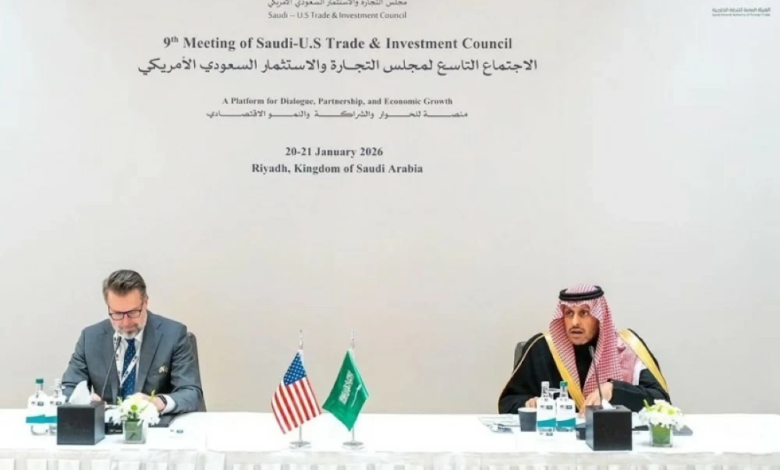

The Saudi capital, Riyadh, hosted the ninth meeting of the Saudi-US Trade and Investment Council, a strategic step aimed at deepening economic cooperation between the two countries. The meeting was chaired by the Saudi General Authority for Foreign Trade and the US Office of the United States Trade Representative, with broad participation from 20 government and private sector entities from both sides, reflecting the great importance both countries attach to this event.
31 initiatives to support the Kingdom's Vision 2030
The meeting's agenda focused on discussing 31 joint and national initiatives, in addition to a range of diverse activities across various vital sectors. These initiatives directly aim to achieve the national economic and commercial objectives stemming from the Kingdom's Vision 2030, which seeks to diversify income sources, reduce dependence on oil, open new avenues for foreign direct investment, and create an attractive and competitive business environment.
Historical context and strategic partnership
This meeting is based on the strong framework of Saudi-American relations that extends over decades, as the Trade and Investment Council (TIFA) is the main platform for trade and investment dialogue between the two countries since the signing of the framework agreement in 2003. These meetings are of particular importance in light of global economic transformations, as both sides seek to move the relationship from traditional trade exchange to a comprehensive strategic partnership that focuses on technology, industry, and innovation.
Council objectives and future of cooperation
The Council, in its current session, aims to enhance economic cooperation through a comprehensive review of existing trade and investment policies and to work diligently to address any obstacles that may impede the flow of trade between Riyadh and Washington. The technical dialogue between relevant parties also focuses on streamlining trade procedures and addressing technical and regulatory barriers that may face exporters and investors.
In a related context, the meeting placed great emphasis on supporting cooperation in the areas of health and phytosanitary measures and agricultural products, which enhances food security and facilitates the movement of agricultural goods. The importance of strengthening intellectual property rights protection, developing digital trade, and encouraging innovation and emerging technologies was also stressed—sectors that are key drivers of future economic growth in both countries.