Saudi Arabia's weather in February: Above-average rainfall and high temperatures

The National Center for Meteorology in Saudi Arabia issued its detailed climate report for February, revealing significant weather forecasts indicating noticeable changes in weather patterns compared to normal annual averages. The report included strong indications of above-average rainfall, along with a marked rise in surface temperatures and increased wind activity across a wide area of the Kingdom.
Details of the expected rainfall
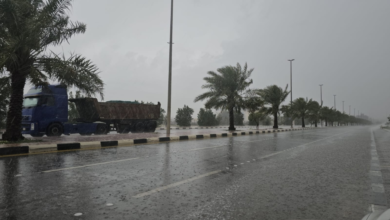
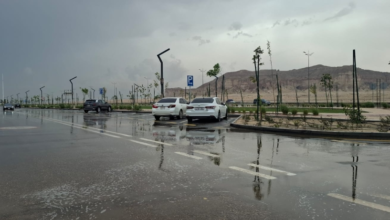
Climate maps issued by the center indicate a 55% probability of above-average rainfall, particularly affecting parts of central Medina, the eastern and central regions of Qassim, and the eastern, central, and northern parts of Hail. The forecast also extends to the Northern Borders and Al-Jawf regions. The report excludes parts of northern Riyadh and the Eastern Province from this increased rainfall, describing the expected amounts in the affected areas as ranging from moderate to heavy, thus requiring vigilance and caution.
High temperatures and wind activity
Regarding temperatures, forecasts indicate a 70% probability of average surface temperatures being above normal across all regions of the Kingdom. The maximum increase of 1.4°C is expected in parts of southern and southwestern Eastern Province, southeast of Riyadh, and eastern and central Jazan. As for winds, forecasts for February 2026 show an increase in speed, potentially reaching 0.9 m/s in the south and east of the Kingdom, with southerly to southeasterly winds prevailing.
Climate context and the importance of the report
This report comes at a time when February is typically a transitional period between winter and the onset of spring weather patterns in the Arabian Peninsula. This climate data is of paramount importance to those involved in urban planning, agriculture, and water resource management, as early forecasting of rainfall increases helps in preparing for irrigation seasons and storing water in dams.
Expected effects and safety measures
Given the forecast of potentially heavy rainfall in some areas, preparedness for flash floods and overflowing wadis is crucial, especially in open and low-lying areas of Medina, Hail, and Qassim. Weather experts consistently emphasize the importance of monitoring real-time weather forecasts and early warnings, as this information plays a vital role in protecting lives and property and enhancing the effectiveness of responses to any emergencies that may arise from severe weather fluctuations.