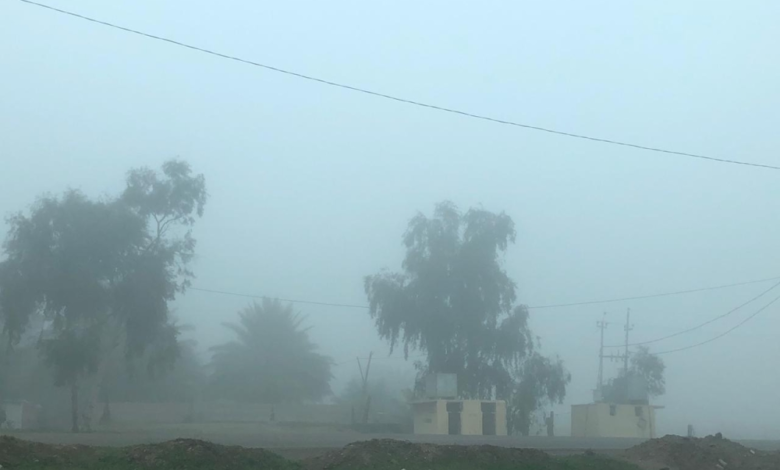

The National Center for Meteorology in Saudi Arabia issued a detailed weather report, warning of varying intensities of fog affecting large parts of eight administrative regions in the Kingdom during the early morning hours of Wednesday. The center explained that this weather phenomenon will continue to affect some areas until 7:00 AM and extend to 8:00 AM in others, urging motorists to exercise caution.
Details of affected areas and reduced visibility
The alerts included warnings of reduced horizontal visibility to between 3 and 5 kilometers, with the possibility of zero or near-zero visibility of 1 to 3 kilometers in specific locations. The report identified the affected areas and cities as follows:
- Eastern Province: Warnings were issued for the cities of Jubail, Khobar, Khafji, Dammam, Qatif, Ras Tanura, Al-Ahsa, Al-Udayd, and Abqaiq. The Eastern Province is among the areas most prone to fog due to high humidity levels coming from the Arabian Gulf.
- Makkah Region: Coastal and highland areas were affected, including Al-Shuaiba, Al-Qunfudhah, Al-Lith, Al-Kamil, Rahat, Madrakah, and Taif Governorate.
- Madinah region: The fog included Al Mahd, Wadi Al Fara, Al Hanakiyah, and Madinah.
- Asir region: Fog covered the coasts and highlands in Al-Birk, Al-Qahmah, Abha, Al-Namas, Balqarn, Tanomah, and Khamis Mushait.
- Other regions: The situation included the Jazan region (Farasan, Jazan, Al Darb, Bish), the Northern Borders (Tarif), Al Jawf (Al Qurayyat, Tabarjal), and Tabuk (Al Wajh, Duba).
The climatic and geographical context of the phenomenon
This weather pattern is typical of the weather fluctuations that occur during transitional periods and winter in Saudi Arabia. The Kingdom's diverse geography plays a key role in fog formation; the bodies of water, namely the Red Sea to the west and the Arabian Gulf to the east, contribute to the influx of significant amounts of moisture, which condenses when temperatures drop at night and in the early morning, forming dense fog. The mountainous terrain in regions like Asir and Taif also contributes to trapping low clouds and fog, further increasing its density and reducing visibility.
The importance of warnings and their effects
These alerts issued by the National Center for Meteorology are of paramount importance at both the local and service levels, as the fog directly affects land, sea and air navigation:
- Traffic safety: Fog is one of the main causes of chain traffic accidents on highways, which necessitates the mobilization of security and traffic authorities to regulate traffic and alert drivers to the need to leave safe distances and use the designated fog lights.
- Air traffic and ports: Poor visibility may delay some flights or slow down navigation in commercial and industrial ports, especially in vital coastal cities such as Dammam, Jeddah and Jubail, which underscores the importance of monitoring weather forecasts for the logistics sector.
The National Center of Meteorology calls on everyone to follow its continuous reports through its official platforms to ensure public safety and avoid potential risks while traveling in these conditions.