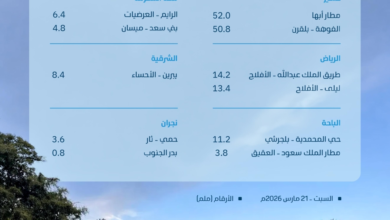

The National Center for Meteorology in Saudi Arabia has released its periodic climate forecast report for the first quarter of 2026, covering the first three months (January, February, and March). This report is part of ongoing efforts to monitor weather patterns and provide accurate data that supports various vital sectors in the Kingdom, from agriculture to urban planning and crisis management.
The importance of seasonal climate forecasts
These reports are of paramount importance given the Kingdom's vast geographical diversity, which results in drastically varying weather patterns from one region to another. These forecasts help relevant authorities and citizens prepare in advance for extreme weather events, whether heavy rainfall that could lead to flash floods and overflowing wadis, or heat waves that could disrupt daily activities and energy consumption.
Rainfall map for January 2026
According to the center's data, January stands out as one of the most active months in terms of rainfall, with forecasts indicating above-average rainfall ranging from heavy to very heavy. This weather activity is particularly concentrated in the northern and eastern regions, including:
- Northern Border Region.
- Al-Jawf region (excluding its western parts).
- Hail region (excluding the southern parts).
- West and central Medina region and parts of its east.
Meanwhile, the rest of the Kingdom's regions remain within normal or slightly lower ranges during this month.
February and March forecast: Rainy conditions to continue
As we move into February, the center expects rainfall to be around its normal levels (moderate to heavy) and the rain mass to move to include different areas such as Jazan, eastern Asir, eastern Makkah, and the south of both Riyadh and the Eastern Province.
As for March, the forecast continues to record rainfall around the normal average, with the rainy weather concentrated on Najran, northeast of Mecca, and large parts of Medina and Tabuk, in addition to southern Riyadh and the Eastern Province.
Rising temperatures: an important climate indicator
Regarding temperatures, the report revealed a general trend of rising average temperatures across all regions of the Kingdom during the first quarter of 2026. Data indicates that the increase could reach 1.0 degrees Celsius above the usual annual average, and this rise is clearly evident in:
- Central, southern, and eastern parts of the Eastern Province.
- East of Najran region.
- The eastern and southeastern parts of the Riyadh region.
This rise reflects global climate changes affecting the region, which necessitates continuous monitoring.
Recommendations and follow-up
The National Center of Meteorology concluded its report by emphasizing that these forecasts represent long-term seasonal analyses, stressing the need to follow the daily weather bulletins and early warnings issued by the center through its official platforms, to ensure public safety and keep up with any sudden changes in the weather.