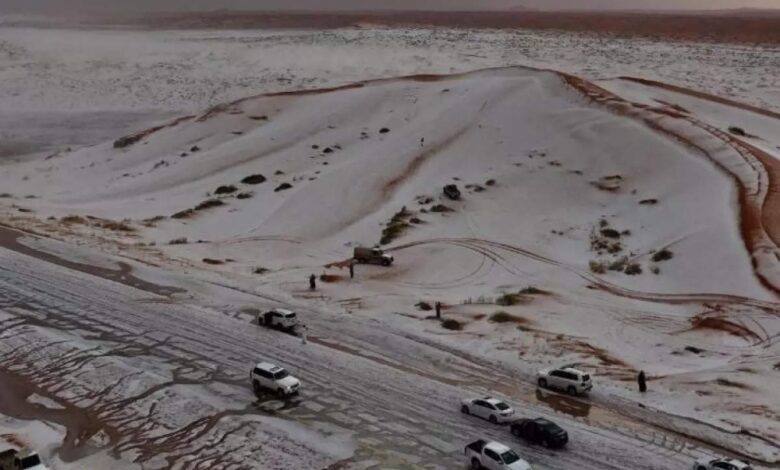
Weather forecast: Tabuk and Sakaka are the coldest, with temperatures 5 degrees lower, and rain in several areas

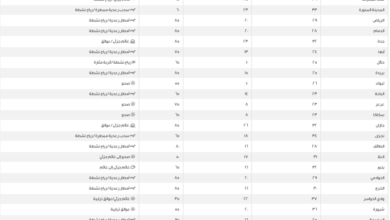
Northern regions of Saudi Arabia experienced a significant drop in temperatures this morning, Sunday, with the cities of Sakaka and Tabuk recording the lowest temperatures at 5 degrees Celsius, making them the coldest areas in the Kingdom today. This decrease coincides with unstable weather conditions affecting several regions, according to the National Center for Meteorology's daily report.
The data issued by the center explained that the cold wave was not limited to Tabuk and Sakaka only, but extended to include other governorates in the northern and northeastern regions, where Rafha and Arar recorded 7 degrees Celsius, while the minimum temperatures in the Hail and Qassim regions reached 8 degrees Celsius, indicating the gradual penetration of the cold air mass towards the central regions.
Accompanying weather phenomena: dust and rain
According to the official weather report, the weather will not only be cold, but will also feature active surface winds that will stir up dust and sand. Parts of the Tabuk, Al-Jawf, and Northern Borders regions are expected to be affected by these winds, which may lead to near-zero horizontal visibility, especially on highways and in open areas. There is also a chance of light rain, which may help to moderate the weather somewhat in those areas.
Meanwhile, the chance of thunderstorms with rain and active winds continues across a wide area, including parts of Jazan, Asir, and Al-Baha regions, extending to the highlands of Makkah, and parts of the Riyadh and Eastern Provinces. The center also warned of the possibility of fog forming during the night and early morning hours, which could reduce visibility in parts of the aforementioned regions, as well as Hail, Qassim, and Madinah.
The climatic and geographical context of cold waves
This weather pattern is typical for this time of year, as the northern regions of the Kingdom (such as Tabuk, Al-Jawf, and the Northern Borders) are the first gateway for cold air masses arriving from higher latitudes and polar regions via the Mediterranean basin. These regions are characterized by a geography and topography that cause temperatures to drop more rapidly compared to other parts of the Kingdom, resulting in them consistently recording the lowest temperatures during winter and seasonal transitions.
Important recommendations for public safety
Given these weather fluctuations, weather experts and relevant authorities advise citizens and residents to exercise caution, especially drivers on highways in areas experiencing heavy dust or fog. They recommend maintaining a safe distance and using appropriate lighting. Residents of areas experiencing low temperatures are also advised to wear suitable winter clothing to avoid catching a cold and to continuously monitor official weather bulletins issued by the National Center of Meteorology to stay updated on the latest weather developments.