Saudi Arabia weather: Tabuk records 3 degrees, warnings issued for dust and rain

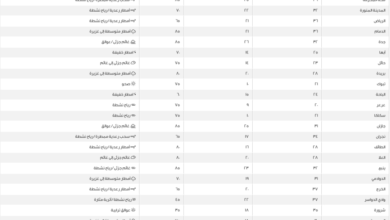
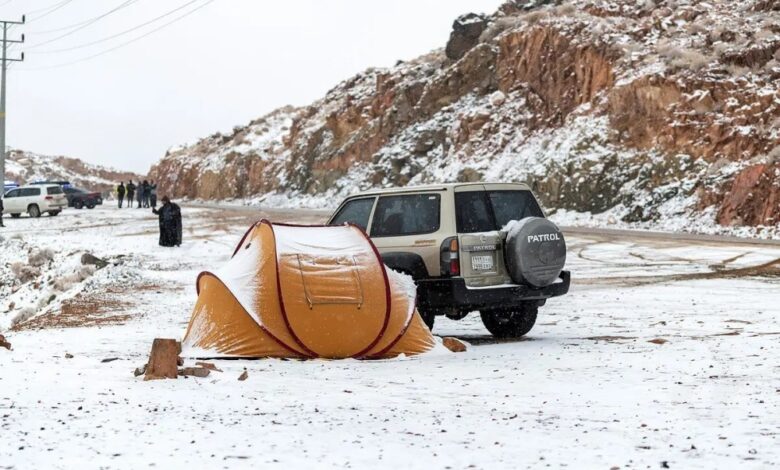
Northern regions of Saudi Arabia experienced a significant and sharp drop in temperatures on Wednesday morning, with Tabuk recording the lowest temperature at 3 degrees Celsius, a clear indication of the deepening cold air mass affecting the Kingdom. The city of Tarif came in second with a low of 4 degrees Celsius, followed by Arar, which recorded a low of 6 degrees Celsius. Residents are advised to take necessary precautions to cope with the cold wave.
Details of the National Center for Meteorology report
The National Center for Meteorology issued its daily weather report for Saudi Arabia , indicating that weather maps predict a continued drop in temperatures across most regions. The report not only warned of colder temperatures but also cautioned about strong surface winds that could stir up dust and sand, significantly reducing horizontal visibility, particularly on highways and in open areas in parts of Tabuk, Al-Jawf, the Northern Borders, Hail, and extending to the Madinah region.
Chance of rain and fog
In its weather forecast, the center indicated that the sky will be partly to mostly cloudy, with a chance of light rain that may refresh the atmosphere in parts of Makkah, Al-Baha, Asir, and Jazan regions. This chance extends to parts of the northern and eastern regions of the Kingdom. The center also warned of fog that may form during the night and early morning hours, increasing the risks of driving on roads in parts of the western and southwestern regions of the Kingdom.
The state of the Red Sea and the Arabian Gulf
Regarding maritime navigation, the report indicated that surface winds over the Red Sea will be northwesterly to northerly in the northern and central parts, and southeasterly to southerly in the southern part, with speeds reaching up to 45 km/h and wave heights reaching 2.5 meters, resulting in moderate to rough sea conditions. In the Arabian Gulf, winds will shift to northwesterly in the evening, with the possibility of thunderstorms and rain, which may raise waves and cause rough sea conditions at times.
Climate context and the impact of the cold wave
These weather fluctuations are part of a natural climatic pattern experienced by the Kingdom during winter, particularly in January, which is considered the peak of the winter season. Northern regions such as Tabuk and the Northern Borders are affected by Siberian high-pressure systems and air masses originating from the north, making them susceptible to significantly lower temperatures compared to other areas. This situation is particularly significant given Tabuk's geographical location and high altitude, making it a gateway for cold waves whose effects may later extend to the central and eastern regions.
Expected effects and safety recommendations
Due to strong winds causing dust storms and reduced visibility, travelers on highways connecting the northern regions with Medina are advised to exercise caution. Authorities also consistently emphasize the importance of using safe heating methods during such cold weather to prevent suffocation or fires, and of wearing warm winter clothing, especially for children and the elderly, to protect against colds and seasonal illnesses associated with low temperatures.