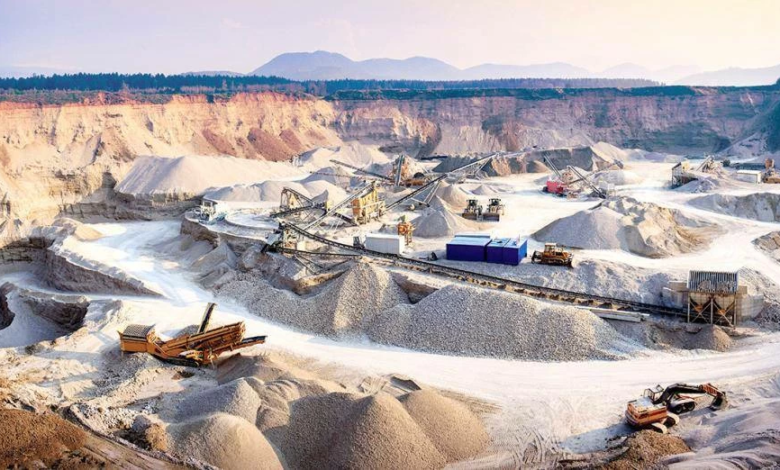
Saudi Arabia is among the top 10 mining countries with a wealth of 9.4 trillion riyals

A historic leap for the Saudi mining sector
In a move reflecting the remarkable acceleration of economic diversification, the annual report on Saudi Vision 2030 revealed that the Kingdom has achieved an exceptional milestone by ranking among the top 10 countries globally in terms of attractiveness for mining investment. This advanced ranking, issued by the prestigious Fraser Institute of Canada, crowns the Kingdom's concerted efforts to transform the mining sector into the third pillar of Saudi industry, alongside oil and petrochemicals.
The value of untapped mineral resources in Saudi Arabia has witnessed a remarkable 90% increase, rising from an estimated SAR 4.9 trillion to approximately SAR 9.4 trillion (equivalent to USD 2.5 trillion). This substantial figure not only represents an increase in valuation but also reflects the success of intensive geological survey and exploration programs that have revealed promising potential for strategic minerals such as gold, copper, phosphate, and uranium, in addition to rare earth minerals used in advanced technology industries.
Historical context and strategic shift
Historically, the Arabian Peninsula boasts a rich mining heritage dating back thousands of years, with ancient mines such as Mahd Adh Dhahab. However, for decades, the Kingdom's modern economy relied almost entirely on oil. With the launch of Vision 2030, the Kingdom adopted a comprehensive national strategy to develop its industrial and mineral resources sector. This strategy aims to attract billions of dollars in investment, develop infrastructure, and modernize regulations and legislation to be more globally competitive. This has directly resulted in an improved investment climate and the attraction of major international companies.
Integrated impact on the national economy
The renaissance in the mining sector extends beyond simply extracting resources; it also fuels other vital sectors. The industrial sector has witnessed significant expansion, with the number of factories in the Kingdom increasing from 7,206 to over 12,900 by the end of 2025, representing industrial investments of 1.2 trillion riyals. This growth strengthens local value chains and reduces reliance on imports, contributing to industrial security and self-sufficiency in many products.
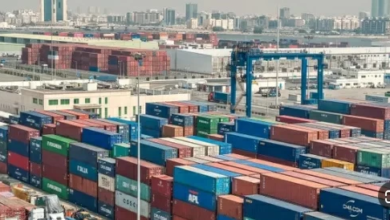
To support this industrial and mining boom, the logistics sector was developed in parallel. The number of operational logistics centers rose to 24, and the number of licensed bonded zones increased from 6 to 21. Most importantly, the average customs clearance time decreased from 9 hours to less than 2 hours, a significant achievement that accelerates trade and strengthens the Kingdom's position as a regional and international logistics hub connecting three continents.
Digital leadership as a foundation for growth
The Kingdom recognizes that modern economic transformation relies fundamentally on a sophisticated digital infrastructure. In this context, Saudi Arabia has strengthened its leading position in the global digital economy, achieving first place in key international indicators such as the ICT Development Index, the Digital Readiness Index, and the Cybersecurity Index. This digital leadership not only supports the efficiency of government operations but also provides a solid foundation for advanced industries and smart mining based on artificial intelligence and the Internet of Things, thus ensuring sustainable growth and enhanced operational efficiency.
These indicators collectively confirm that the transformation led by Vision 2030 is a structural and profound transformation, reshaping the structure of the Saudi economy to be more diversified, flexible and globally competitive, consolidating the Kingdom’s position as an emerging economic, industrial and technological power.