Saudi Arabia's weather during the sighting of the Shawwal crescent: Rain and dust in 7 regions

Amid widespread anticipation from Muslims and the public regarding the announcement of the date of Eid al-Fitr, the National Center for Meteorology in Saudi Arabia has released its weather forecast for the period of crescent sighting for Shawwal on Wednesday, March 19. The center predicts that the Kingdom's skies will be partly to mostly cloudy, which may affect field observations and monitoring at various astronomical observatories.
The effect of weather conditions on the sighting of the crescent moon of Shawwal
The sighting of the new moon is of paramount importance in Saudi Arabia. Historically and religiously, the Supreme Court calls upon all Muslims to observe the crescent moon at approved astronomical observatories, such as the observatories of Hawtat Sudair and Tamir, which are considered among the most important observation points. Weather conditions play a crucial role in the possibility of sighting the crescent moon with the naked eye or through telescopes. The appearance of dense cloud formations and reduced horizontal visibility may obscure the crescent, which, according to Islamic law, may lead to the completion of Ramadan as a 30-day month if the crescent moon is not sighted at all.
Rainfall map and affected areas
Detailed reports issued by the center indicate favorable conditions for thunderstorms of varying intensity across several vital regions, including Tabuk, Al-Jawf, the Northern Borders, Hail, and Al-Qassim. The forecast also extends to parts of the Makkah and Madinah regions, as well as the northern and western parts of the Riyadh region. These weather fluctuations coincide with the spring transition period, historically known in the Arabian Peninsula for its frequent and rapid atmospheric changes and the formation of cumulonimbus clouds.
Surface wind activity and its impact on travel
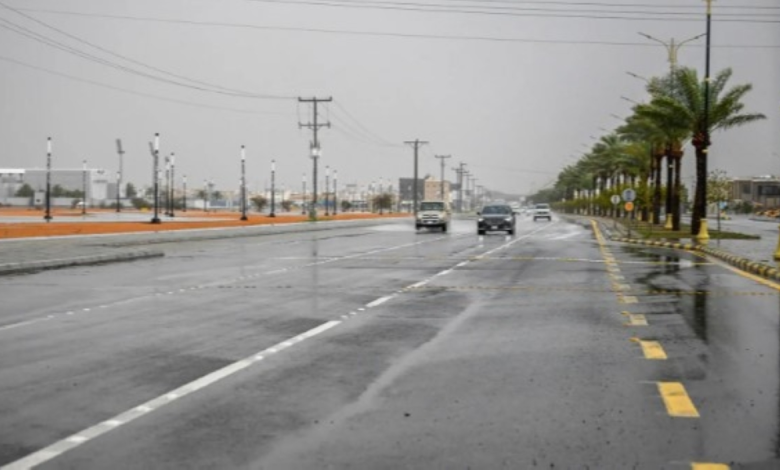
With the approach of the Eid al-Fitr holiday, highways connecting the Kingdom's cities and provinces are experiencing heavy traffic as travelers head out to spend the holiday with their families. In this context, the center warned of significant surface wind activity stirring up dust and sand across large parts of these regions. These winds are causing varying degrees of reduced horizontal visibility, posing a major challenge to travel and requiring drivers to exercise extreme caution to avoid traffic accidents.
Important guidelines from the Meteorological Department
The National Center for Meteorology stressed the importance of following its updates and periodic reports issued around the clock to ensure public safety. The center urged all citizens and residents to obtain information from official sources and to fully comply with the instructions and guidelines of relevant authorities, such as Civil Defense and Highway Patrol, especially given the current volatile weather conditions affecting large parts of the Kingdom during this critical period.