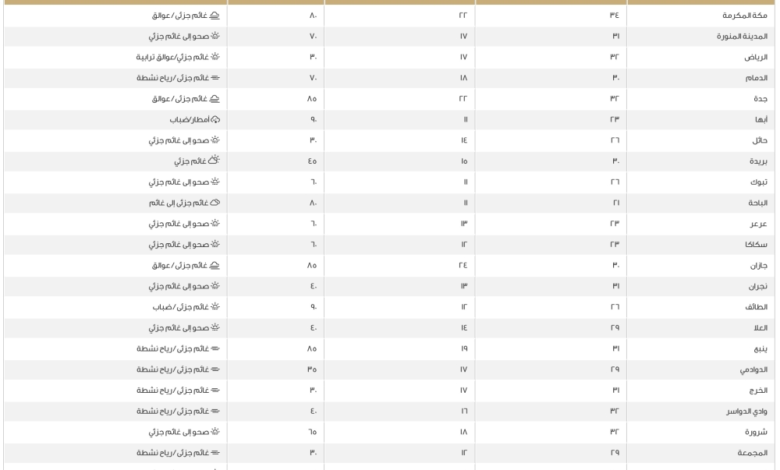

أعلن المركز الوطني للأرصاد في المملكة العربية السعودية، اليوم الخميس، عن تقريره اليومي المفصل حول درجات الحرارة العظمى المسجلة في مختلف مناطق ومدن المملكة. وقد أظهر التقرير تبايناً مناخياً يعكس الطبيعة الجغرافية المتنوعة للمملكة، حيث سجلت مدينة الدمام 30 درجة مئوية، في حين تصدرت مكة المكرمة وبعض المناطق الصحراوية القائمة بأعلى درجات حرارة.
تفاصيل درجات الحرارة في المدن السعودية
وفقاً للبيانات الصادرة عن المركز، جاءت درجات الحرارة العظمى المسجلة اليوم كالتالي، حيث نلاحظ ارتفاعاً نسبياً في المناطق الوسطى والغربية مقارنة بالمناطق الشمالية:
- الدمام: 30 درجة مئوية.
- مكة المكرمة: 34 درجة مئوية.
- المدينة المنورة: 31 درجة مئوية.
- الرياض: 32 درجة مئوية.
- جدة: 32 درجة مئوية.
- أبها: 23 درجة مئوية.
- حائل: 26 درجة مئوية.
- بريدة: 30 درجة مئوية.
- تبوك: 26 درجة مئوية.
- الباحة: 21 درجة مئوية.
- عرعر: 23 درجة مئوية.
- سكاكا: 23 درجة مئوية.
- جازان: 30 درجة مئوية.
- نجران: 31 درجة مئوية.
- الطائف: 26 درجة مئوية.
- العلا: 29 درجة مئوية.
- ينبع: 31 درجة مئوية.
- الدوادمي: 29 درجة مئوية.
- الخرج: 31 درجة مئوية.
- وادي الدواسر: 32 درجة مئوية.
- شرورة: 32 درجة مئوية.
- المجمعة: 29 درجة مئوية.
- الوجه: 26 درجة مئوية.
- رفحاء: 25 درجة مئوية.
- القريات: 21 درجة مئوية.
- طريف: 18 درجة مئوية (الأقل حرارة).
- القنفذة: 31 درجة مئوية.
- الأحساء: 31 درجة مئوية.
- حفر الباطن: 28 درجة مئوية.
- بيشة: 31 درجة مئوية.
- السودة: 17 درجة مئوية.
- روضة التنهات وصحراء الدهناء والصمان: 34 درجة مئوية.
التنوع المناخي والجغرافي في المملكة
تعكس هذه الأرقام التنوع الكبير في تضاريس المملكة العربية السعودية وتأثيرها المباشر على المناخ. فبينما تسجل المناطق الساحلية مثل الدمام وجدة درجات حرارة معتدلة تميل للدفء والرطوبة، نجد أن المناطق الجبلية المرتفعة مثل السودة (17 درجة مئوية) والباحة (21 درجة مئوية) تتمتع بأجواء أكثر برودة، مما يجعلها وجهات سياحية مفضلة. في المقابل، تحافظ المناطق الشمالية مثل طريف والقريات على درجات حرارة منخفضة نسبياً مقارنة بباقي المناطق، خاصة في فترات التحول الفصلي.
دور المركز الوطني للأرصاد وأهمية المتابعة
يعد المركز الوطني للأرصاد الجهة الرسمية المخولة بمراقبة الطقس والمناخ في المملكة، حيث يعتمد على شبكة واسعة من المحطات والرادارات المتطورة لرصد المتغيرات الجوية بدقة عالية. وتكتسب هذه التقارير اليومية أهمية بالغة للمواطنين والمقيمين، حيث تساعدهم في تخطيط أنشطتهم اليومية، وتحديد الملابس المناسبة، فضلاً عن أهميتها للقطاعات الحيوية مثل الزراعة والنقل والملاحة الجوية والبحرية، لضمان السلامة العامة واتخاذ التدابير الوقائية اللازمة بناءً على حالة الطقس المتوقعة.