
Eid al-Fitr is considered one of the most important religious and social occasions eagerly awaited by Muslims. In Saudi Arabia, the holiday takes on a special character, blending deep spirituality with authentic traditions. In this context, a recent study highlighting the behaviors of Saudi society during Eid al-Fitr revealed figures reflecting the deep-rooted family values within the Saudi psyche.
Survey details: The family is at the forefront of the scene
A public opinion poll conducted by the National Center for Public Opinion Polls revealed that the majority of Saudis prefer to spend Eid morning with their immediate family. This preference was expressed by 53% of respondents, and includes parents, spouse, children, and siblings. In contrast, 40% of participants indicated they prefer to spend this joyous occasion with extended family gatherings, including uncles and aunts. The study sample comprised 1,105 participants, 68% of whom were men and 32% women.
Celebration styles and other options
In addition to family gatherings, the results revealed a diversity of ways people spent Eid morning. Five percent of participants indicated they spent Eid morning at their workplaces to ensure the continuity of essential services, while 1% preferred to sleep immediately after Eid prayers to maintain their daily routines. Regarding broader celebration patterns, 88% expressed a preference for gatherings with family and relatives. Eight percent participated in entertainment events held within their cities, 1% chose to attend Eid celebrations in other cities, 1% preferred to travel outside the Kingdom, and 2% mentioned various other options.
The historical and cultural context of Eid traditions in Saudi Arabia
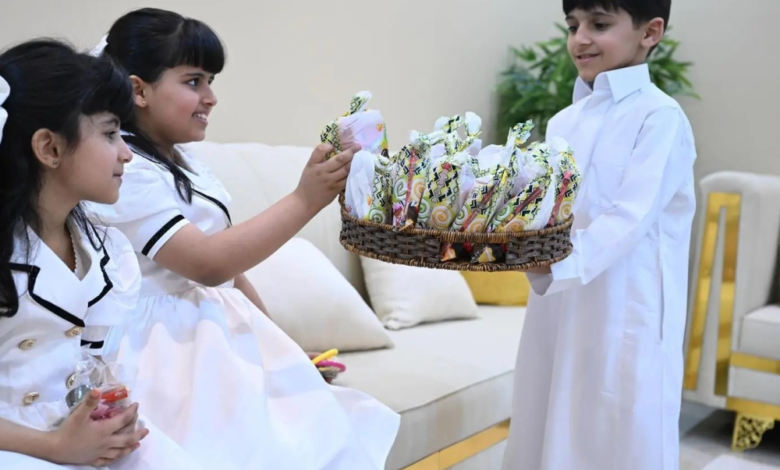
Historically, Eid morning in the Arabian Peninsula has been associated with inherited customs that have remained largely unchanged despite rapid urban and technological development. The day always begins with the Eid prayer in mosques and open prayer grounds, followed by greetings and well-wishes exchanged with beaming faces. Afterwards, families gather for the traditional Eid breakfast, which varies from region to region within the Kingdom, but remains a symbol of generosity and hospitality. Giving Eidiya (Eid gifts) is also considered one of the most important historical traditions, bringing joy to children and strengthening bonds and affection between different generations.
Local and regional importance and impact
Domestically, this adherence to family gatherings reflects the strength and resilience of the Saudi social fabric, directly aligning with the goals of Saudi Vision 2030, which emphasizes the importance of enhancing quality of life and family ties as the foundation for building a vibrant and cohesive society. Economically, these gatherings and celebrations significantly boost commercial activity, whether through the purchase of new clothes, sweets and chocolates, or visits to popular local restaurants and entertainment venues.
Regionally and internationally, Saudi Arabia presents a unique cultural model for preserving national identity and Islamic values, particularly the importance of kinship ties, in a world rapidly moving towards individualism and isolation. The preference of Saudis to spend Eid with their families is not merely a poll statistic; it is a clear message affirming that the comprehensive development and modernization the country is witnessing are proceeding alongside the preservation of its roots, authenticity, and noble social values.