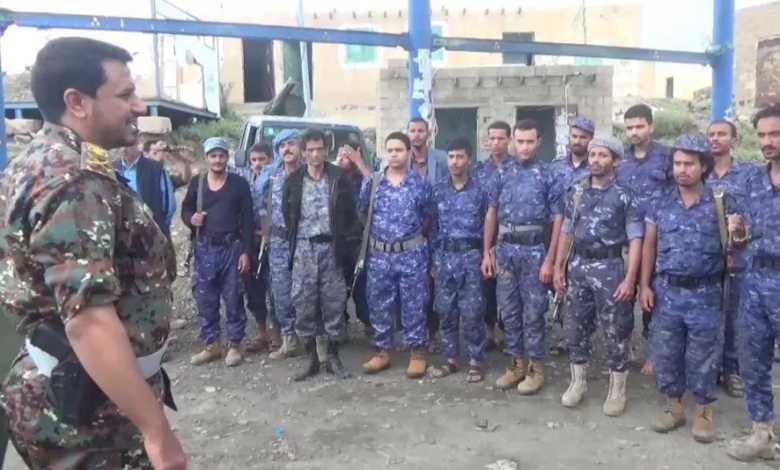
Security personnel in Sana'a refuse to allow the Houthis to confiscate their land

The Yemeni capital, Sana'a, witnessed an unprecedented state of tension, following the refusal of members of the security forces under the control of the Houthi group to allow influential leaders in the group to confiscate their lands, in a new indication of escalating internal disputes and the expansion of the circle of property seizures to include even those loyal to or working in the security services.
Details of the incident and the security refusal
Local sources reported that a number of security personnel in Sana'a intercepted bulldozers and other heavy machinery belonging to Houthi leaders who were attempting to seize large tracts of land owned by the security personnel or previously allocated to them as housing cooperatives. The situation escalated into heated arguments and a firm refusal to relinquish the land under any pretext. The security personnel emphasized that these properties are acquired rights that cannot be relinquished, especially given the salary cuts and deteriorating living conditions.
A systematic approach to property confiscation
This incident is not an isolated event, but rather comes within a systematic context followed by the Houthi group since it took control of the capital, Sana'a, in September 2014. Human rights and local reports indicate that the group established parallel entities such as the "judicial guardian" and bodies affiliated with the newly created endowments, with the aim of seizing the properties of political opponents, merchants, and even state and citizens' lands, under various names including "endowment lands," "military zones," or "properties of traitors.".
The confiscations have expanded to include vast areas surrounding Sana'a, such as Bani Matar, Hamdan, and Sarf, where military campaigns have been launched and citizens' farms and homes have been bulldozed. However, what is new in this situation is the targeting of security personnel, who are supposed to be the executive arm of the de facto authority, reflecting the insatiable appetite of influential leaders to seize property without exception.
Economic and social dimensions
This issue is of paramount importance due to its direct impact on social peace in Houthi-controlled areas. Real estate and land in Yemen represent the citizen's "bank" and source of future security, and the ongoing attempts at confiscation strike at the very heart of the social and tribal fabric. Furthermore, targeting the lands of civil servants and military personnel, who are already suffering from years of unpaid salaries, adds an unbearable economic burden and fuels simmering public discontent.
Repercussions of the internal conflict
Observers of Yemeni affairs believe that the looting and confiscation of security personnel's property reveals a rift within the group's internal front and a power struggle between factions over wealth and real estate influence in Sana'a. Experts warn that the continuation of these policies could lead to internal armed clashes, as ordinary citizens are no longer the only victims, but the circle of those affected has widened to include sectors previously considered untouchable.