Luca Zidane chooses the Algerian national team: His grandfather Ismail's role and the details of the decision

In a move imbued with emotional and historical significance that transcends the pitch, goalkeeper Luca Zidane, son of the legendary French and international footballer Zinedine Zidane, revealed the true reasons behind his decision to represent Algeria instead of France, the country for which he progressed through the youth ranks. The talented goalkeeper emphasized that the primary credit for this pivotal decision goes to his grandfather, Ismail, who had the greatest influence in guiding him towards his ancestral homeland.
Historical roots and family influence
Luca's decision is more than just a change of sporting identity; it's an extension of the Zidane family's story, rooted in the Kabylie region of Algeria, specifically in the province of Bejaia. Zinedine Zidane has always been a source of pride for both France and Algeria, but his son's choice to represent the "Desert Warriors" officially reconnects the family to Algerian football. In an interview with beIN Sports, Luca explained, "When I think of Algeria, I immediately think of my grandfather. We grew up immersed in Algerian culture at home from a young age." He added emotionally, "I spoke with my grandfather before making the final decision, and he was incredibly happy and proud. Every time I'm called up to the national team, he calls to tell me I've made the best decision of my life.".
The phenomenon of dual-nationality players
The addition of Luca Zidane to the Algerian national team reinforces the Algerian Football Federation's strategy of recruiting talented players who developed in Europe, a strategy that has proven highly successful in recent years. Luca follows in the footsteps of other prominent players who chose to follow their roots and return to their homeland, such as Riyad Mahrez, Ismaël Bennacer, and Houssem Aouar, who have become key pillars of the national team. The inclusion of a goalkeeper of Luca's caliber, a product of Real Madrid's La Fábrica academy, is a significant boost to the goalkeeping position, raising the level of competition within the national squad and providing the coach with a wider range of tactical options.
Supporting Zinedine Zidane and Luca's career
Regarding his father, the legendary Zinedine Zidane's, stance, Luca confirmed that his father fully respected his personal choice, saying, "My father supported me and told me: 'This is your choice and your path. I can advise you, but the final decision is yours.'" It's worth noting that Luca Zidane, 27, has a respectable professional career, having started in Real Madrid's academy and trained with the first team before playing in La Liga for Racing Santander, Rayo Vallecano, Eibar, and most recently, Granada.
A strong start with the Greens
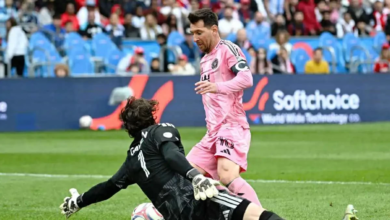
On the field, Luka translated this sense of belonging into tangible performances, making his international debut against Uganda in the 2026 World Cup qualifiers. He also expressed his immense joy at Algeria's resounding 3-0 victory over Sudan in their opening group stage match of the Africa Cup of Nations held in Morocco. The goalkeeper noted that the strong family support he received significantly helped him adapt quickly to the national team environment and integrate with his teammates in training, promising a bright future for the Zidane family's goalkeeper with the Algerian national team.