The crescent moon of Shawwal will be visible in conjunction with the planet Venus this evening

Astronomical anticipation for an exceptional spectacle in the skies of the Arab world
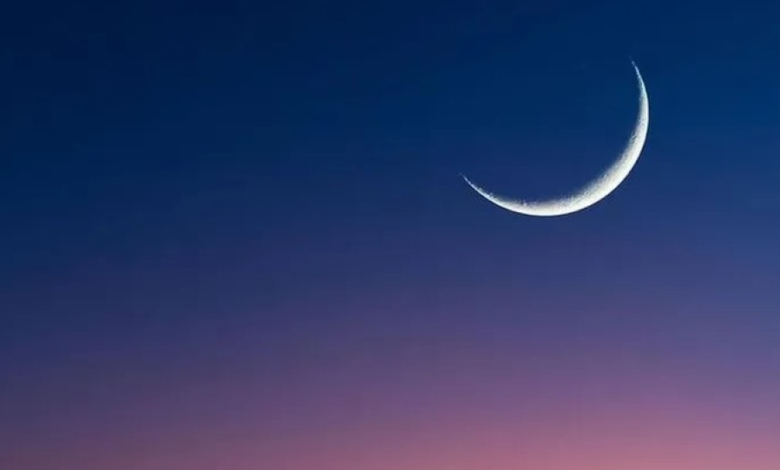
Astronomy enthusiasts and those interested in celestial phenomena in the Arab world will be turning their attention to the western horizon this evening, Friday, March 20, 2026, to witness an exceptional astronomical spectacle. Engineer Majid Abu Zahra, head of the Jeddah Astronomical Society, explained that the region's skies will witness the crescent moon of Shawwal after nightfall. Adding to the allure of this spectacle is its conjunction with Venus, the brightest planet in the solar system, creating a magnificent celestial display that offers an ideal opportunity for observation and photographic documentation, particularly in areas with clear skies free of dust or dense clouds.
The historical context and cultural significance of crescent moon observation
The crescent moon of Shawwal holds immense significance in the Arab and Islamic world, as its appearance heralds the end of the holy month of Ramadan and the arrival of Eid al-Fitr. Historically, the lives of Muslims have been closely intertwined with the lunar cycle to determine the Islamic months and religious occasions. Since ancient times, sighting the crescent with the naked eye has been a firmly established tradition, and with the advancement of science, precise astronomical calculations and modern observatories have become essential for confirming the sighting. The combination of the accuracy of astronomical calculations and the beauty of the natural landscape reflects the profound connection between humanity and the celestial cycles throughout the ages, highlighting the importance of astronomy in guiding daily and religious life.
Details of the birth of the crescent moon of Shawwal and its astronomical movement
Abu Zahra explained that the moon reached its conjunction phase at dawn on Thursday, March 19, Mecca time. Astronomically, this phase is known as the moment when the moon and sun are close together on approximately the same celestial longitude, after which the moon begins its eastward journey relative to the background stars. Over time, the angular elongation between the moon and the sun increases, allowing sunlight to reflect off an increasing portion of its surface. As a result, the crescent moon gradually appears above the western horizon, and its illuminated portion thickens day by day.
By sunset on Friday, the crescent moon of Shawwal will be between 36 and 38 hours old. This is ample time for the crescent to be thick and clearly visible to the naked eye, making it easily observable. The crescent will remain visible in the sky for 80 to 90 minutes after sunset, providing observers and astronomy enthusiasts with ample opportunity to study and appreciate its intricate details.
The enchanting 'light of the earth' phenomenon
One of the striking visual phenomena that can be observed during this event is the 'Earthshine' phenomenon. The head of the Jeddah Astronomical Society noted that observers can see the dark portion of the moon illuminated by a faint glow. This glow results from the reflection of sunlight from the Earth's surface and oceans onto the moon, making the entire lunar disk faintly visible within the arc of the illuminated crescent. The moon is an important visual indicator for tracking the movement of celestial bodies, as its position among the stars changes at a rate of approximately 13 degrees daily towards the east.
Regional influence and astrophotography tips
Regionally and internationally, such phenomena attract considerable attention from space agencies and global observatories, contributing to increased public awareness of science and astronomy and boosting science tourism. Regarding astrophotography, experts explained that the optimal time for capturing professional images of this conjunction begins 20 to 30 minutes after sunset. At this time, the deep blue of the sky is balanced by the brilliance of celestial bodies. Photographers are advised to use a tripod to ensure camera stability, employ a long exposure of several seconds to reveal details of the moon's dark portion, and adjust the ISO appropriately to avoid digital noise in the images.