The Shura Council directs six Saudi universities and approves international agreements

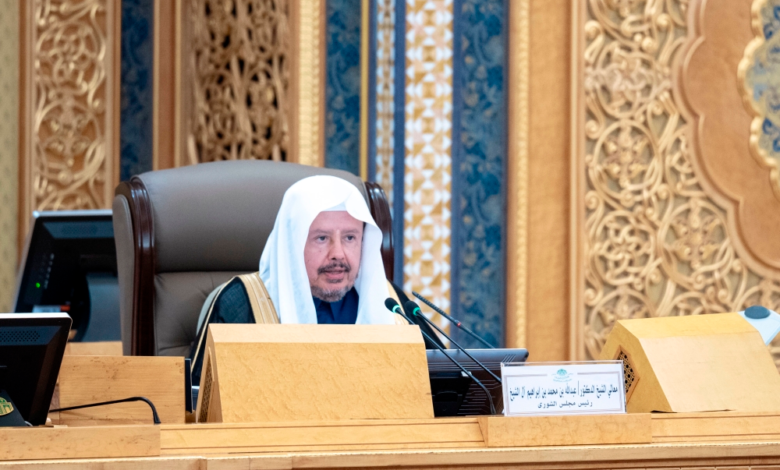
The Saudi Shura Council held its sixteenth regular session of the second year of its ninth term on Tuesday, chaired by Speaker Sheikh Dr. Abdullah bin Mohammed bin Ibrahim Al Sheikh. The session included extensive discussions that concluded with the issuance of a package of important decisions and recommendations aimed at evaluating the performance of several Saudi universities, in addition to approving international memoranda of understanding.
Context of the decisions and their importance in light of Vision 2030
These decisions come at a time when the Kingdom is witnessing a broad educational and regulatory movement aimed at raising the efficiency of spending and improving the quality of educational outputs in line with the objectives of the Kingdom’s Vision 2030. Observers confirm that the Shura Council’s focus on the files of “financial sustainability” and “institutional identity” of universities reflects the general direction of the state towards activating the new university system, which grants universities controlled independence and requires them to diversify their sources of income away from total dependence on the state budget, in order to ensure their continuity and research and academic development.
Firm directives for the Saudi Electronic University
In its resolutions, the Council offered constructive criticism to the Saudi Electronic University, urging it to develop a clear institutional identity that enhances its standing both locally and internationally. The Council emphasized the importance of financial sustainability, calling on the university to build a diversified investment portfolio. The resolution also addressed a crucial issue affecting students, requesting the university to conduct a comprehensive study of the reasons for student academic difficulties and to develop practical solutions to improve the learning environment. This reflects the Council's commitment to addressing academic dropout rates and enhancing the efficiency of human capital.
Strengthening soft power and regional integration
Regarding the Islamic University of Madinah, the Council focused on its international dimension, calling for enhanced presence through global conferences and student exchange programs, and exploring the possibility of opening branches outside the Kingdom. This directive carries strategic implications for strengthening the Kingdom's soft power and disseminating its message of moderation globally.
In the context of major projects, the Council called on the University of Tabuk to study adopting an integrated working model with NEOM University. This recommendation is of paramount importance given the strategic geographic location and to meet the needs of NEOM's mega-projects for expertise and research, thus enhancing regional development in the northwest of the Kingdom. The Council also urged the University of Tabuk to diversify its endowments and investments to ensure financial sustainability.
Restructuring and governance in Bisha and Najran
Administrative aspects were also addressed in the council's decisions. Bisha University was instructed to strengthen its strategic management culture and develop an institutional transformation plan, in addition to restructuring its health colleges in coordination with the Council of University Affairs. Najran University was asked to conduct a study of its institutional status to identify challenges and to refine its identity to reflect the comparative advantages of the Najran region, thus underscoring the state's commitment to making universities engines of development for their respective regions.
International agreements and other files
On the foreign relations front, the Council approved several memoranda of understanding to enhance international cooperation, including a tourism agreement with Hungary, a media cooperation agreement with Kuwait, a social services agreement with Turkey, and development cooperation agreements with Bahrain and Nigeria. The Council also discussed the annual report of the Prince Mohammed bin Salman Park Foundation, postponing a decision on it for further review, reflecting the Council's meticulous approach to examining reports related to quality of life projects.