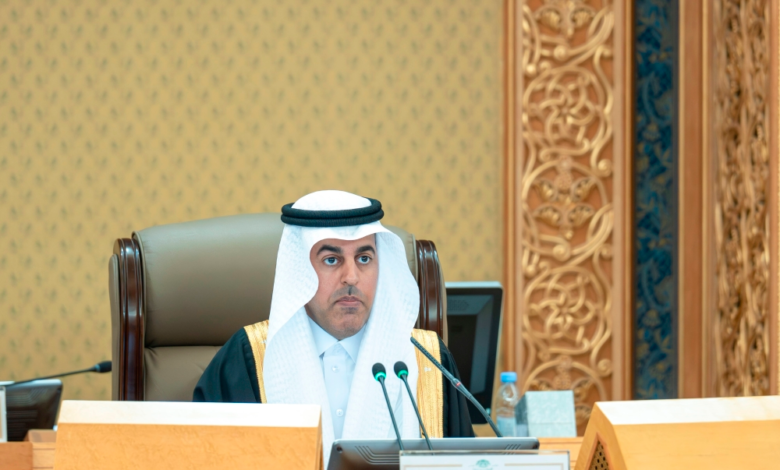

In a move aimed at enhancing the efficiency of the higher education sector and aligning its outputs with the objectives of the Kingdom's Vision 2030, the Shura Council held its twenty-first regular session of the second year of its ninth term on Tuesday, chaired by the Council's Vice President, Dr. Meshal bin Fahm Al-Sulami. The session witnessed the issuance of a package of key decisions and directives targeting several major Saudi universities to ensure the quality of their institutional and educational performance.
The context of the decisions and their strategic importance
These decisions fall within the Shura Council's oversight and legislative role in monitoring the performance of government agencies and public institutions. This move is particularly significant given the major transformations underway in the Kingdom's education sector, where the government, through its "Human Capacity Development" program, seeks to raise the global ranking of Saudi universities and bridge the gap between educational outcomes and the evolving needs of the labor market. The directives issued today serve as a roadmap for correcting course in certain administrative, research, and investment aspects of the targeted universities.
Special instructions for Umm Al-Qura University and King Abdulaziz University
The council began its deliberations with directives to Umm Al-Qura University, urging it to enhance the efficiency of its measurement and evaluation system to ensure the accuracy of its indicators. The council also stressed the need to develop a digital institutional communication strategy to strengthen the university's presence both locally and internationally. Furthermore, the council emphasized the importance of completing the infrastructure at the university's branches and exploring the possibility of expanding internationally.
Regarding King Abdulaziz University, the council focused on governance and investment aspects, urging the university to review its strategic initiatives methodology. Among the most prominent points raised by the council was the demand for the university to conduct a comprehensive study to determine the reasons for the high percentage of scholarship recipients returning without obtaining their degrees—a phenomenon that necessitates fundamental solutions to preserve national resources.
Restructuring education in peripheral areas
The council gave special attention to the Northern Borders University, calling for a restructuring of the colleges in the Rafha and Tarif governorates. The resolution emphasized the need to align academic programs with the region's comparative advantages, particularly in the mining sector, which is currently a cornerstone of the national economy. This will enhance employment opportunities for the region's residents and support local economic development.
Enhancing corporate identity and entrepreneurship
In a related context, the council called on Qassim University to highlight its institutional identity in a way that reflects the nature of the region, and demanded the development of indicators to measure the impact of startups supported by the university, to ensure that knowledge is transformed into tangible economic value.
Discussions on women's empowerment and financial sustainability
The session was not limited to resolutions; it also included extensive discussions of reports from Princess Nourah bint Abdulrahman University and Al-Baha University. Members suggested that Princess Nourah University expand its graduate programs and establish a global association of women's universities. Discussions regarding Al-Baha University focused on the need to create sustainable investment models and to adopt accredited e-learning to enhance the university's self-generated revenue.
These deliberations reflect the Shura Council’s keenness to push Saudi universities towards achieving financial sustainability and academic excellence, in a way that serves the major national aspirations.