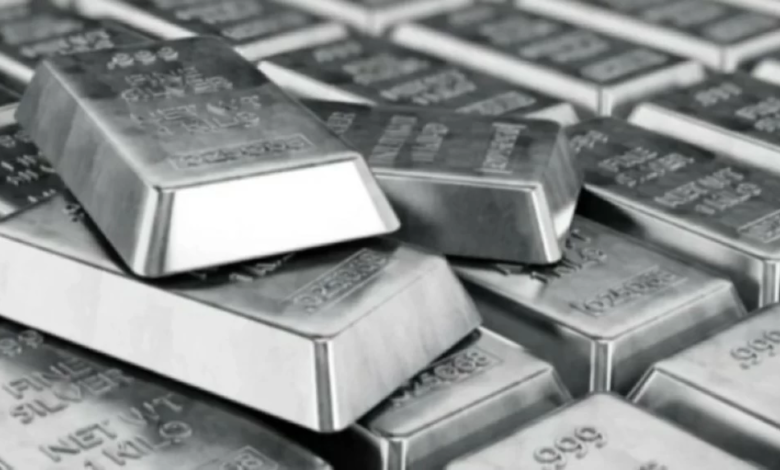

Global financial markets witnessed a dramatic shift in precious metals trading on Friday, with silver prices experiencing a sharp and unexpected decline. The white metal lost approximately 21.98% of its market value compared to its peak on Thursday. The price of an ounce of silver plummeted rapidly during trading on Friday, reaching $94.85, a dramatic drop from the record high of $121.56 reached in the previous session. This represents an actual loss of $26.71 per ounce in less than 24 hours.
Impact of the decline on the local market and the Saudi Riyal
This global collapse had a direct and immediate impact on local markets and currency trading linked to metals. According to Saudi Riyal market calculations, the price of silver per kilogram witnessed a significant decline, having traded yesterday (Thursday) at a high of 14,655 Riyals per kilogram. With today's heavy selling, the price per kilogram fell to 11,435 Riyals, marking a decrease of 3,220 Riyals per kilogram. This presents an opportunity for investors looking to buy but represents a shock to short-term speculators.
The nature of silver fluctuations in financial markets
Economically, silver is known among traders as more volatile than gold. Historically, silver has often experienced sharp and rapid price movements, both upward and downward. This is partly due to the relatively small size of the silver market compared to the gold market, meaning that any large buy or sell orders have a significant and dramatic impact on prices. This type of decline, known as a "hard correction," typically follows rapid record highs, as investors and hedge funds engage in "profit-taking" to secure their gains, creating strong selling pressure that drives prices down.
The economic and industrial importance of silver
Despite this price decline, silver remains a vital element in the global economy due to its dual nature; it is both an investment metal (a safe haven) and an industrial metal. Silver is a key component in many modern industries, such as the manufacture of solar panels, batteries, microelectronics, and medical equipment. Therefore, economic analysts believe that industrial demand often provides a "supportive floor" for prices in the long term, even if markets experience sharp speculative fluctuations in the short term.
Tips for investors during periods of volatility
Amid these volatile movements, economists advise investors to exercise caution and diversify their portfolios. A 22% loss in a single day serves as a stark reminder of the risks of trading in commodity markets without clear risk management strategies. Local market participants should closely monitor global economic indicators, such as the strength of the US dollar and interest rates, as precious metal prices often have an inverse relationship with the strength of the US currency.