Smart technologies to manage the density of Tawaf and Sa'i in the Two Holy Mosques

In a strategic move aimed at enhancing the experience of pilgrims, the General Authority for the Care of the Two Holy Mosques announced the launch of a package of significant technological upgrades, primarily focused on the system for monitoring the density of circumambulation (Tawaf Marwa (Sa'i), in addition to organizing visitor routes. This initiative is part of the "Quick Wins" plan, specifically designed to accommodate the massive influx of people during the holy month of Ramadan.
Historical context and digital transformation in the Two Holy Mosques
This step was not a spur-of-the-moment decision, but rather an extension of the Kingdom of Saudi Arabia's ongoing efforts over the past decades to develop and expand the Two Holy Mosques. Following years of massive construction projects, the development vision has shifted towards the "Smart Mosque," where the Kingdom is harnessing the latest artificial intelligence and data analytics technologies to serve pilgrims. This approach aligns perfectly with the objectives of the Kingdom's Vision 2030, specifically the "Guests of God Service Program," which aims to facilitate the hosting of Umrah and Hajj pilgrims and provide high-quality services that reflect the Kingdom's positive image.
How new crowd management technologies work
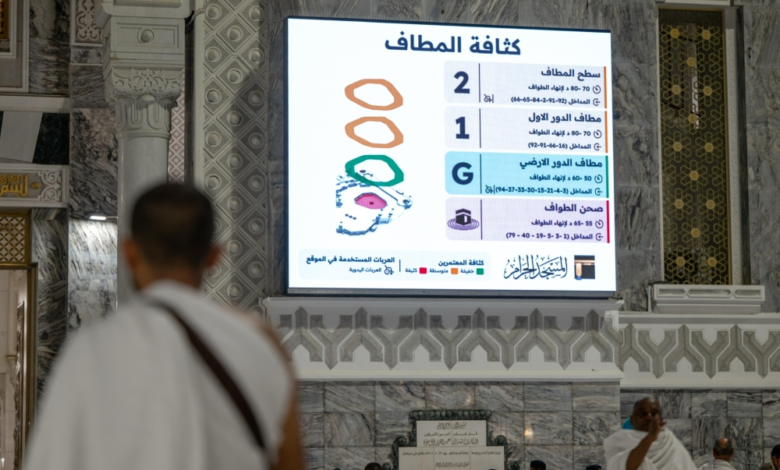
The new system relies on sophisticated algorithms to intelligently guide crowds, aiming to raise visitor awareness of density levels in different areas and zones before they proceed. This technology is characterized by the following features:
- Regular data updates: Density data is updated every 30 minutes in the Grand Mosque, giving pilgrims high flexibility in decision-making and choosing the least crowded times and routes.
- Guidance color coding: Using an illustrative color system (light, medium, high) across signage and digital platforms to indicate the level of crowding and the expected time required to complete the rituals on each floor.
- Supporting people with special needs: Allocating and clarifying the most suitable and easiest entrances for people with disabilities and the elderly to access the Mataf and Sa'i areas.
Developing the visitation system at the Prophet's Mosque
The upgrades weren't limited to Mecca; they also extended to the Prophet's Mosque in Medina by increasing the speed of real-time data flow. The new systems allow for live display of visitor routes, with highly accurate prayer times, effectively contributing to crowd management, enhancing the spiritual experience for visitors, and ensuring smooth movement in the Rawdah Ash-Sharifah (the area between the Prophet's grave and his pulpit) and towards the Prophet's grave.
Strategic importance and expected impact
This event is of great importance both locally and within the Islamic world, as these technologies are expected to contribute to:
- Enhancing public safety: by anticipating overcrowding and breaking up human masses before they form at bottleneck points.
- Distributing the density: Making the most of all levels of the Grand Mosque (ground floor, first floor, roof) and reducing the pressure on the circumambulation area.
- Psychological comfort: Reducing the stress caused by overcrowding, which allows the pilgrim to devote himself to worship with tranquility and devotion.
Integrated technical solutions in the field
In support of these digital efforts, the Authority equipped the area with 10 large electronic screens distributed across the main entrances, displaying real-time crowd density. QR codes were also deployed, enabling pilgrims to monitor the situation in real time via their smartphones, in a practical application of the comprehensive digital transformation concept aimed at serving visitors to the Two Holy Mosques with the highest standards of quality and efficiency.