Al-Alimi warns against the Transitional Council's unilateral actions and their impact on legitimacy

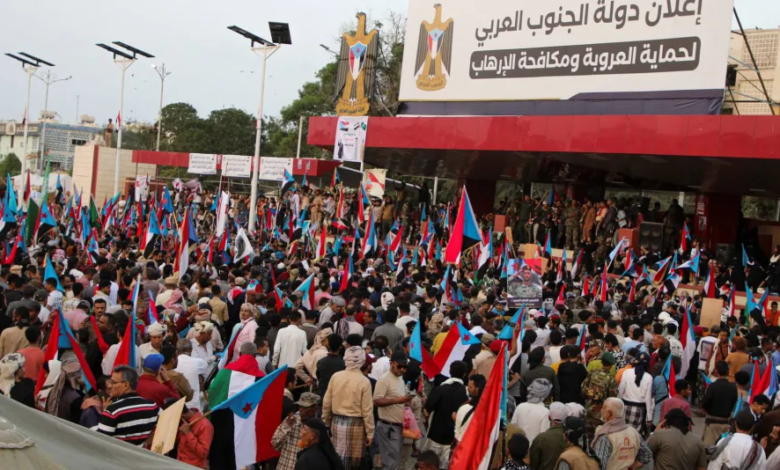
Dr. Rashad Mohammed Al-Alimi, head of the Presidential Leadership Council in Yemen, reiterated his explicit warnings against the consequences of the Southern Transitional Council's continued unilateral actions, indicating that such steps could undermine the council's cohesion and threaten unity in the face of current challenges. This stance comes at a time when the interim capital, Aden, and the liberated governorates are witnessing political and administrative tensions that are directly impacting the performance of government institutions.
Context of the crisis and background of the tension
The Presidential Leadership Council was established in April 2022 following the declaration of the transfer of power, with the aim of unifying anti-Houthi forces under a single umbrella. The council includes leaders from various factions, including the Southern Transitional Council. Despite the hopes placed on this formation to end internal divisions, differing political visions, particularly regarding the southern issue and the management of resources and institutions in Aden, continue to hinder full stability. Unilateral actions, whether administrative appointments or security deployments without prior agreement, are considered violations of the principle of partnership and consensus upon which the council was founded.
Economic and service-related repercussions
The risks of these measures are not limited to the political sphere; they extend to the economic and living conditions of citizens. The lack of harmony within the legitimate government negatively impacts its ability to manage the economy, curb the depreciation of the national currency, and provide essential services such as electricity and water. Experts warn that continued infighting could lead to further collapse of public services, exacerbating the suffering of citizens in liberated areas who rely on state stability to improve their living conditions.
Impact on the peace process and the international stance
Regionally and internationally, the cohesion of the Presidential Leadership Council is seen as a cornerstone of any efforts to achieve peace in Yemen. The countries sponsoring the political process, foremost among them Saudi Arabia and the United Arab Emirates, support the necessity of maintaining the Council's unity to ensure a strong negotiating position with the Houthis and to guarantee security and stability. Observers fear that unilateral actions could weaken the government's position and derail efforts to end the coup and restore state institutions, ultimately benefiting those obstructing peace.