Qalibaf warns Trump against igniting the region and extending the US deadline

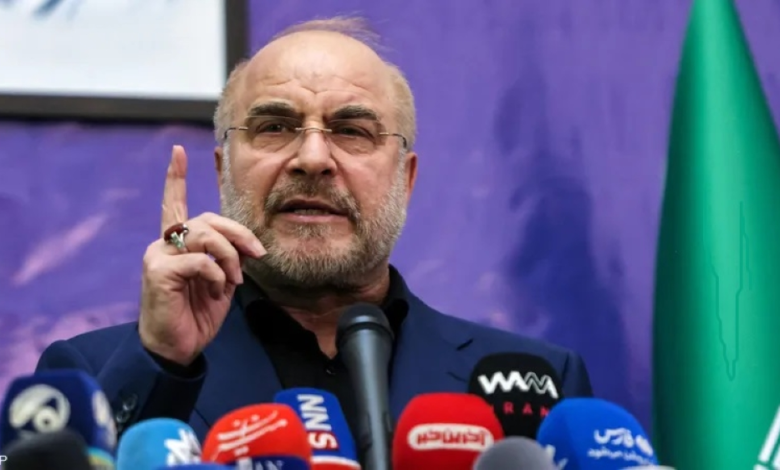
Amid escalating geopolitical tensions in the Middle East, Iranian Parliament Speaker Mohammad Bagher Ghalibaf issued a strongly worded warning to US President Donald Trump, asserting that his policies and actions, which he described as "reckless," threaten to ignite the entire region. This statement comes at a time when relations between Washington and Tehran are at a critical juncture, raising international concerns about the potential for open military confrontation.
In detailing the Iranian position, Qalibaf posted a message in English on his official X account (formerly Twitter), addressing the US administration directly. He stated, “Your reckless actions are dragging the United States into a hell that every American family will pay for, and the entire region will burn because you insist on following the orders of Israeli Prime Minister Benjamin Netanyahu.” The Iranian parliament speaker added, emphasizing that “the only real solution to avoid this escalation is to respect the rights of the Iranian people and end this dangerous game that threatens international peace and security.”.
Trump extends deadline given to Tehran
On the other hand, in a move reflecting the scale of the mutual pressure, US President Donald Trump appeared to extend the deadline he had given Iran to reach an agreement guaranteeing the reopening of the strategic Strait of Hormuz, or face what he described as “devastating” military action. Trump posted a brief message on his social media accounts specifying the new deadline: “Tuesday, 8:00 PM EST.” This new deadline (corresponding to midnight Tuesday-Wednesday GMT) represents only a one-day postponement of the ultimatum issued to Tehran. Trump had previously threatened to destroy vital infrastructure in Iran, including power plants and bridges, if diplomatic efforts failed and no agreement was reached that met US demands.
The historical context of US-Iranian tensions
These rapid developments are the culmination of a long history of hostility and tension between the United States and Iran, which has deepened considerably since Washington’s unilateral withdrawal from the nuclear agreement (the Joint Comprehensive Plan of Action) in 2018 during Trump’s first term. Since then, the US administration has pursued a policy of “maximum pressure,” which has included crippling economic sanctions targeting Iran’s oil and banking sectors. In response, Tehran has reduced its nuclear commitments and bolstered its regional influence, turning the waters of the Persian Gulf, particularly the Strait of Hormuz through which roughly one-fifth of the world’s oil supply passes, into a constant flashpoint and the stage for an undeclared tanker war.
Expected repercussions at the regional and international levels
This escalating tension has extremely serious repercussions that extend far beyond the borders of the two countries. Regionally, any military strike against Iranian infrastructure or closure of the Strait of Hormuz would paralyze maritime traffic, threatening global energy security and driving oil prices to record highs, which would further damage the already fragile global economy. Moreover, the involvement of allies of both sides in any potential conflict could broaden the scope of the fighting to include other countries in the Middle East, threatening the region's fragile stability. Internationally, this crisis places Washington's European allies, as well as major powers like China and Russia, in a difficult position, as they strive to avoid a scenario of all-out war and advocate for dialogue and diplomacy to avert a looming economic and security catastrophe.