
In a significant development within the geopolitical landscape of the Horn of Africa, the president of Somaliland, Muse Bihi Abdi, expressed his expectation of an imminent trade agreement with Israel, a move that could have far-reaching political and economic implications. This statement reinforces reports circulating about existing channels of communication aimed at strengthening cooperation between the two sides in various fields.
The context of the search for international recognition
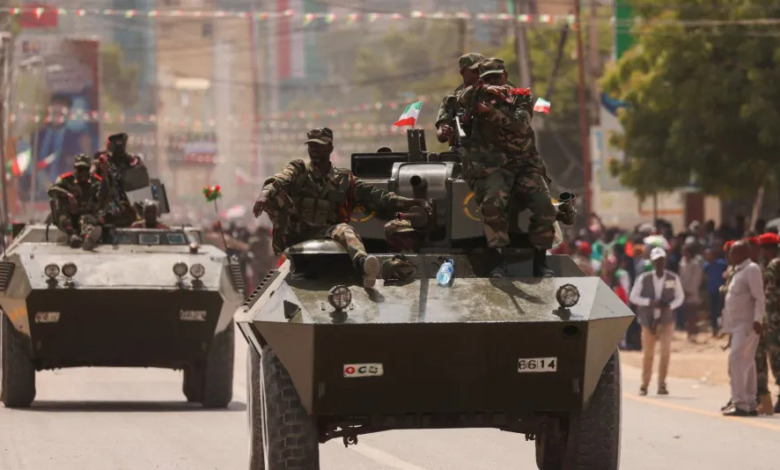
To understand the implications of this statement, one must consider the historical and political background of Somaliland. This region unilaterally declared its independence from Somalia in 1991 following the collapse of the central government in Mogadishu. Despite enjoying relative security, a democratic political system, its own currency, and a passport, it has yet to receive formal international recognition. Consequently, the government in Hargeisa (the capital of Somaliland) is actively seeking international alliances to break its diplomatic isolation and views relations with Israel as a potential gateway to gaining the support of Western powers, particularly the United States, in order to achieve the desired recognition.
Strategic and economic importance
The anticipated trade agreement extends beyond mere exchange of goods, encompassing the strategic importance of Somaliland's geographic location. The region overlooks the Gulf of Aden and controls a vital stretch of coastline leading to the Bab el-Mandeb Strait, a crucial international waterway through which a significant portion of global trade and oil passes. For Israel, a presence or cooperation with an entity overlooking this strait represents a paramount security and strategic interest, ensuring freedom of navigation and monitoring security threats in the Red Sea.
Economically, Somaliland possesses the port of Berbera, which has undergone significant development and expansion, making it a promising logistics hub in East Africa. The trade agreement could pave the way for Israeli investment in agriculture, water desalination, technology, and infrastructure—sectors that Somaliland desperately needs to support its developing economy.
Expected regional repercussions
This rapprochement is expected to elicit mixed reactions in the region. On the one hand, the Somali Federal Government (Mogadishu) may view this move with suspicion, considering it an infringement on its sovereignty, as it still considers Somaliland part of its territory. On the other hand, this move comes within a broader regional context that has witnessed the signing of the Abraham Accords and the normalization of relations between Israel and several Arab and African states, making Somaliland's move consistent with recent geopolitical shifts in the Middle East and Africa.
In conclusion, a trade agreement between Somaliland and Israel, if it were to happen, would not be just a passing economic deal, but rather an event with political dimensions that could reshape the map of alliances in the vital Horn of Africa region.