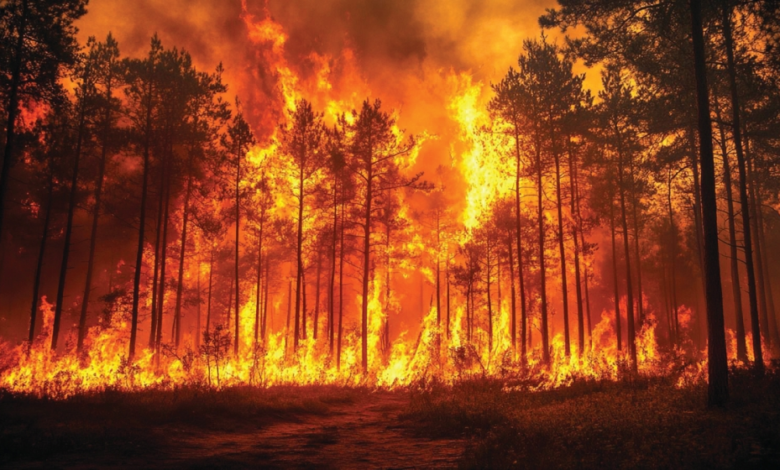

South Africa is facing a growing environmental and humanitarian crisis, with authorities reporting that over 100,000 hectares of land and nature reserves have been affected by fierce wildfires that have raged since the beginning of the week in the Western Cape province. Strong winds and dry conditions have fueled the rapid spread of the fires, turning vast green areas to ash in record time.
Government reports confirmed that the fires not only consumed vegetation but also reached residential areas, destroying dozens of homes and displacing many families. In response to this critical situation, civil defense forces and emergency teams quickly closed main roads to ensure the safety of pedestrians and began large-scale evacuations of residents in the most affected areas, as the flames continued to spread across vast swathes of the region.
Firefighting challenges and rugged terrain
Reflecting the dire situation on the ground, Anton Breedle, head of the Western Cape Department of Local Government, stated, "Fire crews across the province have been mobilized at full capacity to try and control the raging fires." Breedle highlighted the significant logistical challenges facing the teams, explaining that "firefighters are particularly difficult in the Cedarberg Mountains due to the rugged terrain, which makes ground access by vehicle virtually impossible. This has forced authorities to resort to aerial intervention, using helicopters and specialized aircraft to combat the flames.".
The Garden Route Municipal Fire Service issued a warning statement confirming that the fire had spread toward populated areas near the coastal town of Mossel Bay. The statement explained that with a sudden change in wind direction, the flames reached residential neighborhoods that were already under threat, resulting in the complete destruction of at least 10 homes, amidst desperate efforts to protect the remaining lives and property.
Climate context and the impact of global changes
These fires occur within the complex climatic context of southern Africa, where the Western Cape province typically experiences hot, dry summers, making the vegetation known as fenbos highly flammable. While fires are a natural part of the regeneration cycle of this plant species, global climate change has increased the frequency and intensity of these fires, causing them to become uncontrollable and threatening ecological balance and population stability.
Expected economic and environmental repercussions
These fires are expected to have significant negative repercussions at both the local and regional levels. Economically, the Garden Route and Western Cape are among South Africa's most important tourist destinations, and the destruction of vegetation and infrastructure could lead to a decline in tourism this season. Environmentally, the burning of over 100,000 hectares threatens the loss of the region's unique biodiversity, in addition to increasing carbon emissions that exacerbate global warming, necessitating long-term plans to rehabilitate the affected areas once the fires are brought under control.