
Spain officially entered a three-day period of national mourning on Tuesday to honor the victims of the horrific disaster that struck the southern region of Andalusia. The collision of two high-speed trains on Sunday evening killed at least 41 people and injured dozens more, in one of the worst rail accidents the country has seen in recent years.
Details of the disaster and the royal family's visit
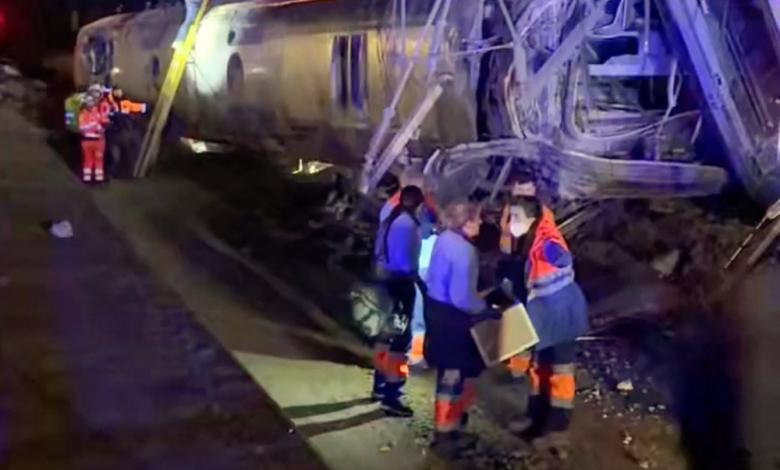
In a gesture of solidarity, King Felipe VI and Queen Letizia of Spain visited the site of the accident near Adamoth, where they inspected the extensive damage and greeted the rescue teams working around the clock. This visit marked the first time the media had been granted direct access to the scene, where parts of the two trains were reduced to mangled metal, reflecting the severity of the collision.
According to official figures from the Andalusian regional government, 39 people remain hospitalized, including four children, while 13 adults are in critical condition in intensive care. The royal couple are scheduled to visit the Reina Sofia Hospital in Cordoba to check on the injured.
Context of the accident and the status of Spanish railways
This accident has come as a major shock to both Spanish and international society, given the global reputation of the Spanish railway network. Spain boasts one of the world's most advanced and safest high-speed rail (AVE) networks, the second longest globally after China. Safety standards on this network are typically very stringent, making such a collision a rare occurrence and raising serious questions about the infrastructure.
This incident brings back painful memories of past accidents, placing immense pressure on authorities to ensure transparent investigations. The disaster is particularly significant given that it occurred during the liberalization of Spain's railway market, with one train belonging to the private company Aero and the other to the national company Renfe, highlighting the challenges of coordination and maintenance in a system with multiple operators.
Investigations and the search for answers
The investigation is currently focused on unraveling the mystery of this accident, which Transport Minister Oscar Puente described as "extremely strange." The collision occurred when an Aerio train bound for Madrid derailed on a newly refurbished straight track and collided with a Renfe train traveling in the opposite direction. Both trains were traveling at speeds exceeding 200 km/h.
Officials, including the Interior Minister and the head of Renfe, have almost entirely ruled out human error or sabotage. Experts suggest the most likely cause is a sudden technical malfunction in the train cars or a break in the track, which will be revealed by the ongoing criminal and technical investigations. Authorities expect to finalize the identification and death toll within the next few hours, amid anxious anticipation from the families of the missing.