
In the past few hours, the eastern and southern regions of Libya have witnessed a wave of bad weather and violent storms that have left behind heavy human and material losses, in an event that prompted a wide mobilization by local authorities and emergency teams.
Casualty figures and material damage
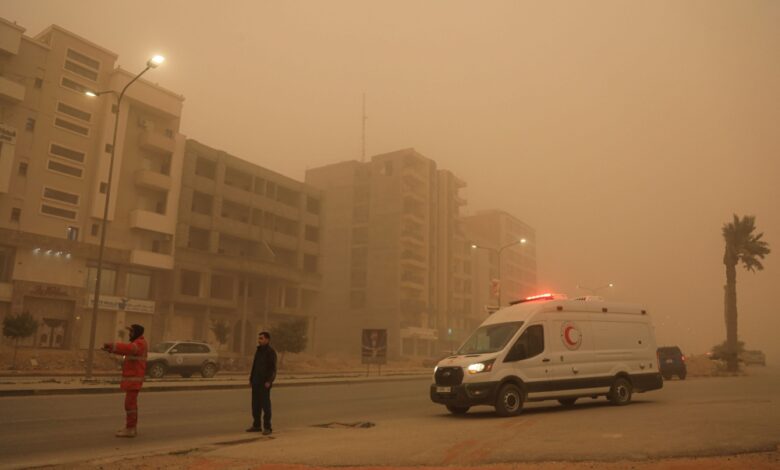
The Libyan Red Crescent Society announced in an official statement today that two people have died as a result of the powerful storm that swept through cities in eastern and southern Libya. The damage was not limited to loss of life, but extended to infrastructure and public and private property. High wind speeds caused several scattered fires, in addition to the uprooting of numerous trees, billboards, and lampposts on main streets, leading to road closures and traffic disruptions. Emergency teams also reported the collapse of walls in some old and dilapidated houses that could not withstand the force of the wind.
The aviation and oil sectors were affected
In a related development, the severe weather conditions disrupted transportation and maritime traffic. The official Libyan news agency confirmed that authorities were forced to impose a complete curfew in some affected areas to protect citizens' lives. Several civilian flights were also suspended or canceled due to extremely low visibility caused by thick dust and sand stirred up by the winds.
On the economic front, field reports indicated that oil ports in the Oil Crescent region (such as the Ras Lanuf port) were affected by these weather fluctuations, as the high waves and winds caused navigational disruptions, including news of an oil tanker sinking and the temporary closure of a number of oil ports as a precautionary measure to ensure the safety of facilities and workers, which reflects the magnitude of the challenges facing vital infrastructure in Libya in the face of natural disasters.
Geographical context and warnings
This storm comes at a time when Libya's infrastructure is already facing significant challenges due to years of instability, making cities more vulnerable to extreme weather events. Authorities are urging citizens to exercise caution, stay away from floodplains and valleys, secure loose objects on rooftops, and adhere to public safety guidelines issued by the Ministry of Interior and the Red Crescent until the storm subsides.