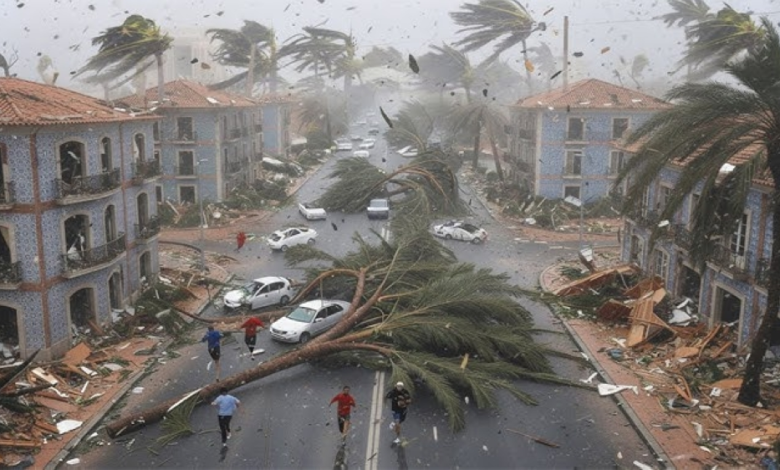
Storm Cristin swept across Portugal with tremendous force, leaving behind significant human and material losses. Rescue teams and local authorities confirmed at least four deaths as a result of the severe weather conditions. The storm, accompanied by torrential rain and fierce winds, brought daily life to a near standstill in several regions, particularly in the capital, Lisbon, and the central part of the country, prompting a large-scale mobilization of civil protection services.
According to official data from the National Civil Protection Agency, the storm's wind speeds reached record levels of 150 kilometers per hour. Daniela Franga, deputy operations commander, explained at a press conference that emergency teams had responded to approximately 3,000 incidents by midday, ranging from large trees falling on roads and buildings to damage to vital infrastructure and severe flooding in low-lying areas.
Losses in energy and transportation
In terms of material damage, the electricity grid suffered extensive damage, with power outages affecting approximately 850,000 homes and businesses in the early hours of Wednesday morning. This widespread outage was primarily caused by trees falling on high-voltage power lines and damage to substations due to strong winds. The transportation network was also significantly impacted, with many main and secondary roads remaining closed or partially blocked, including the vital highway connecting the capital, Lisbon, to the north of the country. Rail services were also disrupted in several regions, leading to significant disruptions in transportation and logistics.
Geographical and climatic context
This storm highlights Portugal's geographical location on the Atlantic Ocean, which puts it in direct contact with deep low-pressure systems coming from the west, especially during the autumn and winter months. Coastal and central regions are the most vulnerable to these extreme weather events, which often cause high waves and threaten residential areas near the coast.
Economic and environmental impacts
Meteorologists and environmental experts believe that the recurrence of such powerful storms, like Storm Christine, may be an indicator of global climate change, which is increasing the intensity and frequency of extreme weather events. The country incurs significant economic losses as a result of these storms, not only in repairing damaged infrastructure but also in terms of business disruptions, the impact on the agricultural sector, and the costs of emergency rescue and relief operations.