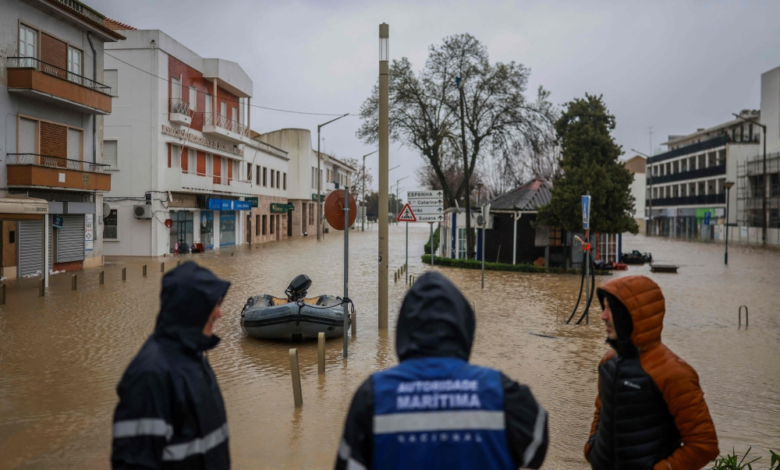

Large areas of southern Spain and Portugal are on high alert after the Iberian Peninsula was hit by Storm Leonardo , which brought torrential rains and strong winds, prompting urgent emergency measures including large-scale evacuations and the suspension of basic services.
The aftermath of the storm in Andalusia
The Andalusia region in southern Spain bore the brunt of the storm, with local authorities evacuating nearly 3,000 people from their homes as a precaution due to fears of river flooding and landslides. The severe weather also brought transportation to a standstill, with trains halted on several key routes and schools closed in most provinces, except for Almería, to ensure the safety of students and teachers.
In a press statement, Rubén del Campo, spokesperson for the Spanish National Meteorological Agency (Aemet), confirmed that the situation was “exceptional,” noting that the ground could no longer absorb more water, increasing the risk of flash floods and torrential downpours. The city of Grazalema recorded record rainfall of 180 liters per square meter in a single night, prompting its mayor to describe the night as “very difficult.”.
Climate context and the impact of global changes
What is currently happening in Spain and Portugal cannot be separated from the broader context of climate change affecting the world, and the Mediterranean region in particular. The Iberian Peninsula is among the European regions most vulnerable to these extreme changes. After years of record-breaking heat waves and prolonged droughts that have devastated the agricultural sector, these violent storms represent the other side of the climate coin.
Climate experts point out that rising Mediterranean temperatures contribute to increased evaporation, which fuels storms with more moisture and energy, making rainfall heavier and more destructive. This pattern of extreme weather, oscillating between severe droughts and devastating floods, has become a recurring feature requiring adaptations to infrastructure and disaster management strategies.
Red alert and safety procedures
Faced with these risks, authorities did not hesitate to activate the "red alert," the highest level of warning on the meteorological scale, particularly in the regions of Cádiz and Ronda and the surrounding mountain ranges. This alert signifies a severe threat to life and property, requiring residents to remain indoors and avoid travel except when absolutely necessary.
Emergency and civil defense teams in both Spain and Portugal are working around the clock to open closed roads and help those affected, amid fears that the rain will continue and the affected areas will expand in the coming hours.