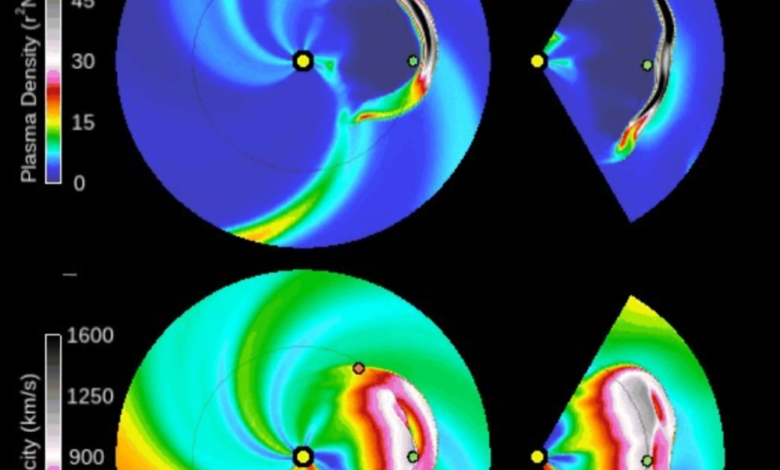

تتجه أنظار العالم نحو الفضاء مع ترقب وصول عاصفة جيومغناطيسية قوية إلى كوكب الأرض، وذلك بعد رصد انبعاثات كتلية إكليلية متتالية من الشمس. وأوضح رئيس الجمعية الفلكية بجدة، المهندس ماجد أبوزاهرة، أن النماذج الحديثة الصادرة عن هيئة التنبؤ بالطقس الفضائي التابعة لوكالة الفضاء الأمريكية «NOAA» تشير إلى احتمالية اندماج انبعاثين كتليين في ظاهرة تُعرف علمياً بـ ”الانبعاث الإكليلي المدمج“، مما قد يؤدي إلى تشكل سحابة بلازمية أكثر كثافة وطاقة أثناء رحلتها نحو الأرض.
وبيّن أبوزاهرة أن هذه الظاهرة تحدث عندما يلحق انبعاث شمسي سريع بآخر أبطأ منه، ثم يندمجان في الفضاء بين الكواكب ليشكلان كتلة واحدة ذات سرعة وكثافة أكبر، الأمر الذي يزيد من قدرتها المحتملة على التأثير في المجال المغناطيسي للأرض عند وصولها. وتشير التوقعات الحالية إلى إمكانية وصول هذه السحابة البلازمية خلال الساعات المتأخرة من يوم 4 يونيو أو فجر 5 يونيو 2024.
ما هي العاصفة الجيومغناطيسية وكيف تتشكل؟
تعتبر العواصف الجيومغناطيسية اضطرابات كبيرة في الغلاف المغناطيسي للأرض، وهو الدرع الواقي الذي يحيط بكوكبنا ويحميه من الإشعاع الشمسي الضار. تنشأ هذه العواصف بشكل أساسي بسبب النشاط الشمسي المتزايد، مثل التوهجات الشمسية والانبعاثات الكتلية الإكليلية (CMEs)، التي تقذف كميات هائلة من الجسيمات المشحونة (البلازما) في الفضاء. وعندما تكون هذه الانبعاثات موجهة نحو الأرض، فإنها تتفاعل مع مجالها المغناطيسي، مسببةً اضطرابات مؤقتة. نحن نقترب حاليًا من ذروة الدورة الشمسية الخامسة والعشرين، وهي فترة تستمر حوالي 11 عامًا يزداد فيها النشاط الشمسي بشكل ملحوظ، مما يجعل حدوث مثل هذه العواصف أكثر تواترًا وقوة.
التأثيرات العالمية المحتملة للعاصفة الجيومغناطيسية القادمة
يتوقع الخبراء أن تتسبب هذه السحابة البلازمية في عاصفة جيومغناطيسية قوية من الفئة «G3»، مع احتمال أن ترتفع مؤقتًا إلى الفئة «G4» (شديدة) إذا تطورت الظروف المغناطيسية المصاحبة بالشكل المتوقع. مثل هذه العواصف قادرة على إحداث تأثيرات ملموسة على مستوى العالم، أبرزها ظهور الشفق القطبي بألوان خلابة على نطاق واسع يمتد إلى خطوط العرض المتوسطة، مما يتيح فرصة لرصده في أجزاء من أوروبا وأمريكا الشمالية. على الصعيد التقني، يمكن أن تؤثر العواصف بهذه القوة على شبكات الطاقة الكهربائية، وتتسبب في اضطرابات في أنظمة الملاحة عبر الأقمار الصناعية (GPS)، وتشويش على الاتصالات اللاسلكية عالية التردد المستخدمة في قطاعي الطيران والملاحة البحرية. ورغم أن هذه العاصفة أقل قوة من تلك التي شهدها العالم في مايو 2024، إلا أنها تظل حدثًا فلكيًا مهمًا يستدعي المراقبة.
لماذا سيكون تأثير العاصفة محدوداً على المملكة والمنطقة العربية؟
أكد المهندس أبوزاهرة أن التأثيرات المتوقعة لهذه العاصفة على السعودية والعالم العربي ستكون محدودة للغاية. ويعود السبب الرئيسي في ذلك إلى الموقع الجغرافي للمنطقة العربية بالقرب من خط الاستواء، حيث تكون تأثيرات العواصف الجيومغناطيسية في أضعف حالاتها، بينما تتركز قوتها بالقرب من القطبين الشمالي والجنوبي. لذلك، لا يُتوقع ظهور أي نشاط للشفق القطبي في سماء المنطقة. أما التأثيرات التقنية المحتملة، فمن الممكن أن تقتصر على انخفاض طفيف ومؤقت في دقة أنظمة تحديد المواقع العالمية «GPS»، أو اضطرابات طفيفة في بعض الاتصالات اللاسلكية، وهي تأثيرات لن تكون ملحوظة لعامة الناس ولن تشكل خطرًا مباشرًا على البنية التحتية أو الحياة اليومية.