Student results via the Noor system: Announcement date and grade monitoring mechanism

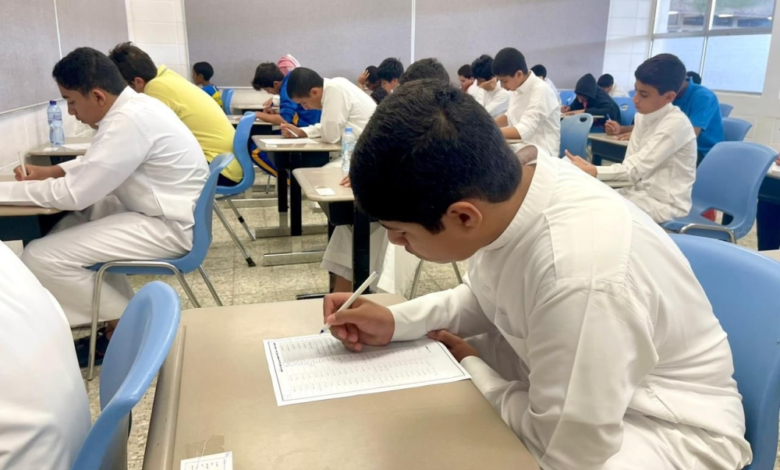
Public schools in Saudi Arabia concluded their written end-of-term exams for the first semester on Thursday, marking the end of a crucial assessment period for millions of students. The conclusion of the exams coincided with strict ministerial directives to educational departments and schools to expedite the monitoring and verification processes through the "Noor" electronic system, in preparation for announcing the final results before the end of the school day, allowing families and students to view the fruits of their labor without delay.
Digital transformation and the efficiency of the Noor system
The complete reliance on the central "Noor" system is part of the Kingdom's digital transformation strategy under Vision 2030, whereby the Ministry of Education has successfully automated all academic processes. This system represents a qualitative leap in the history of Saudi education, as it has transitioned monitoring mechanisms from traditional paper-based methods to a fully integrated digital environment that ensures data accuracy and rapid results. The system's importance is also reflected regionally, as it is one of the largest educational databases in the Middle East, enabling decision-makers to monitor educational indicators with high precision.
The mechanism for monitoring grades and dealing with dropouts
In the context of administrative procedures, the Ministry emphasized the necessity of entering all data and grades with utmost accuracy. Official instructions outlined a specific mechanism for dealing with students who have interrupted their studies during the current semester. Their status will be recorded as "absent" in the electronic system instead of being "dismissed," thus preserving their academic records and educational progress from procedural disruption. This measure reflects the Ministry's commitment to retaining students and providing them with opportunities to complete their education.
Alternative testing procedures and grade improvement
The ministry settled the debate about the possibility of retaking exams to improve grades, as it blocked any individual interpretations, categorically confirming that no student who has already taken the end-of-term exam will be retaken, regardless of the reasons, in order to uphold the principle of fairness and equal opportunities for all.
Regarding absent students, the regulations outlined two different paths:
- Absence with an acceptable excuse: The student is given the opportunity to take an alternative exam worth 40 marks, while retaining all the marks for coursework (60 marks).
- Absence without excuse: This is dealt with by deducting attendance marks, where the student is tested out of 60 marks (including short and final tests), while retaining only 40 marks allocated to the rest of the assessment tools.
Educational and social impact
The prompt release of results on the same day as the exams reflects the efficiency of the education system and contributes to the psychological well-being of students and parents, allowing them to enjoy the mid-term break without the anxiety of waiting. Furthermore, clear attendance policies establish shared responsibility between the school and the family to ensure student discipline and the achievement of targeted learning outcomes.