The operational plan for the Ramadan season of 1447 AH in the Two Holy Mosques was a success

Introduction: A new achievement in serving the guests of God
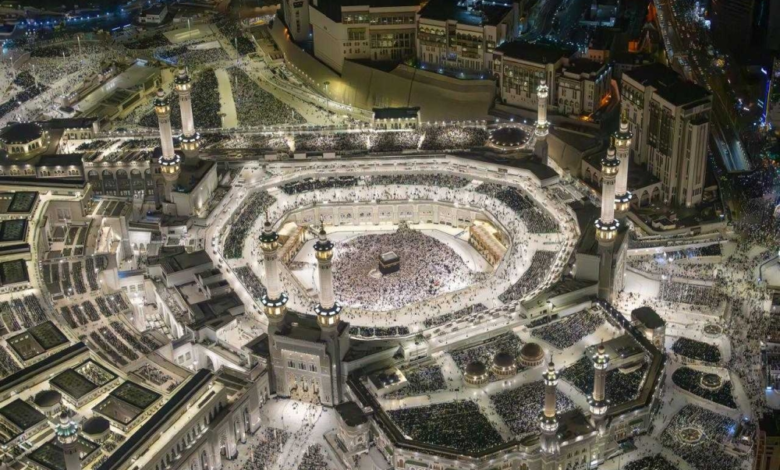
The General Authority for the Care of the Two Holy Mosques announced the success of its operational plan for the holy month of Ramadan 1447 AH, which facilitated the participation of millions of pilgrims and Umrah performers from within and outside the Kingdom of Saudi Arabia. This significant achievement is the culmination of diligent efforts and a comprehensive operational system based on proactive planning and institutional integration among all service, security, operational, and health entities. This high level of coordination contributed to the efficient and effective management of the millions of pilgrims, ensuring a distinguished spiritual experience for the guests of God. This was achieved under the direct supervision and guidance of the Makkah Region Governorate and the Madinah Region Governorate, establishing an advanced operational model that enhances the smooth flow of movement within the Two Holy Mosques and their courtyards.
Historical context and the Kingdom's Vision 2030
Historically, since its founding, the Kingdom of Saudi Arabia has given utmost attention and care to the Two Holy Mosques and their visitors. The success of the operational plan for Ramadan 1447 AH is a natural extension of this great historical legacy. In the modern era, these successes are closely aligned with the objectives of Saudi Vision 2030, which aims to enhance the quality of services provided to pilgrims and facilitate the hosting of 30 million Umrah pilgrims annually. The utilization of modern technologies and the expansion of infrastructure reflect the leadership's commitment to providing the highest levels of comfort and safety for Muslims from all corners of the earth.
Integrated work system and effective crowd management
This remarkable success was achieved thanks to the reliance on advanced operations rooms and precise technical connectivity, coupled with continuous field monitoring. Rigorous operational protocols were implemented, enhancing coordination efficiency and expediting responses to all requirements. The Third Saudi Expansion played a pivotal role as a cornerstone of this success, providing vast spaces that contributed significantly to the efficient distribution of crowds. This role was particularly evident on the 27th night of Ramadan, which witnessed the peak of millions of pilgrims without any disruption to the organization or the quality of services provided.
Leading quality initiatives and smart services
The 1447 AH Ramadan season witnessed a range of innovative services that reshaped the pilgrim experience. These included organizing dedicated lanes for electric vehicles, launching a hotel pick-up service, activating interactive 3D maps, and implementing QR code-based "Where We Are" cards. The pivotal role of the Command and Control Engineering Center was also activated, providing direct oversight of electrical, mechanical, and air conditioning systems to ensure continuous operational efficiency around the clock. Furthermore, a smart guidance system was developed, reducing waiting times and achieving a highly seamless travel experience.
Advanced logistics services and exceptional care
These efforts included launching a new governance model for Iftar meals, integrated with the Ihsan National Platform for Charitable Work, improving hygiene protocols, standardizing staff visual identity, and raising awareness to reduce food waste. This was accompanied by the development of Zamzam water services and the distribution of Zamzam water bottles with meals. Furthermore, more than 16 guest care centers were opened, translation services were standardized through modern electronic devices, childcare centers were launched, a volunteer platform was activated, and digital copies of the Quran were made available, making the spiritual journey more accessible and reassuring.
The importance and expected impact of the event
The success of the operational plan for Ramadan 1447 AH has far-reaching dimensions and impacts. Locally, this success enhances the efficiency of Saudi Arabia's infrastructure and supports the local economy by revitalizing the hospitality and transportation sectors, as well as providing thousands of seasonal volunteer and employment opportunities. Regionally and internationally, it solidifies the Kingdom of Saudi Arabia's position as a leader of the Islamic world and presents a global model for managing massive crowds and utilizing technology to serve humanity, thus sending a message of reassurance and peace to millions of Muslims wishing to perform the rituals.