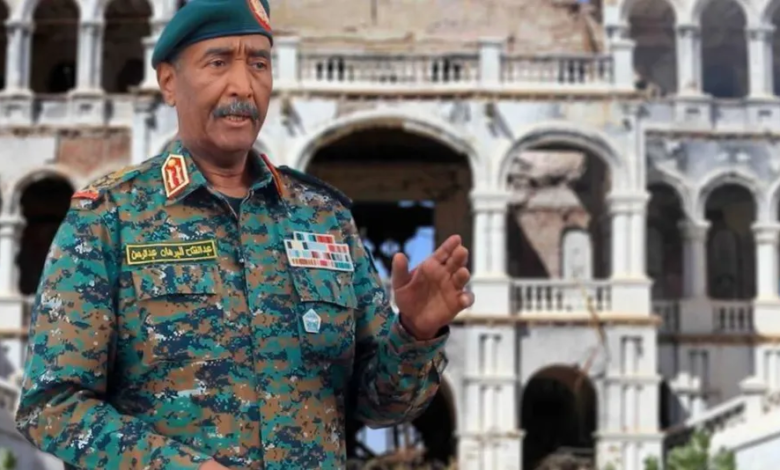
Meeting of the Sovereignty Council and the Council of Ministers in Sudan, chaired by Burhan

The Sudanese capital, Khartoum, witnessed a high-level joint meeting of the Sovereignty Council and the Council of Ministers, chaired by the head of the Transitional Sovereignty Council, Lieutenant General Abdel Fattah al-Burhan. This meeting comes at a highly sensitive time for Sudan, giving it special significance that transcends mere protocol and touches upon the core of governance in light of current challenges.
Constitutional and political context of the meeting
The joint meetings of the Sovereignty Council and the Council of Ministers in Sudan acquire exceptional legal and constitutional significance during the transitional period. In the absence of a legislative council, the authority to legislate, approve laws, and enact regulations rests with the joint meeting of the two councils, as stipulated in the Constitutional Declaration governing the transitional period. This situation effectively transforms these meetings into a "temporary parliament" that discusses critical issues, approves the national budget, and ratifies international agreements, making the outcomes of these meetings a matter of great interest to observers and citizens alike.
The importance of coordination between governing institutions
The fact that Lieutenant General Abdel Fattah al-Burhan chaired this joint meeting in Khartoum is a strong indication of the need to unify visions among the various components of the transitional authority. The challenges facing Sudan, whether security, economic, or diplomatic, require the highest degree of coordination between the head of state (the Sovereignty Council) and the executive branch (the Council of Ministers). The agenda of these meetings often includes vital issues related to people's livelihoods, market regulation, and national security arrangements, in addition to discussing periodic reports on the performance of the various ministries.
Current challenges and aspirations of the Sudanese street
This meeting is being held under complex circumstances that demand decisive action. The Sudanese public is awaiting tangible results that will alleviate the economic hardship and achieve security and stability in the capital and the states. The international and regional community is also closely monitoring the ability of Sudan's governing institutions to work harmoniously to overcome political obstacles. The regularity of these meetings in Khartoum reflects the Sudanese leadership's commitment to activating the machinery of government and directly overseeing the implementation of sovereign and executive decisions, ensuring the transitional phase progresses towards its desired goals of democratic transformation and sustainable stability.
In conclusion, this joint meeting represents a necessary link to bridge the gap between strategic planning and field implementation, as the two councils bear a historic responsibility to guide the country to safety amidst turbulent waves of local and regional changes.