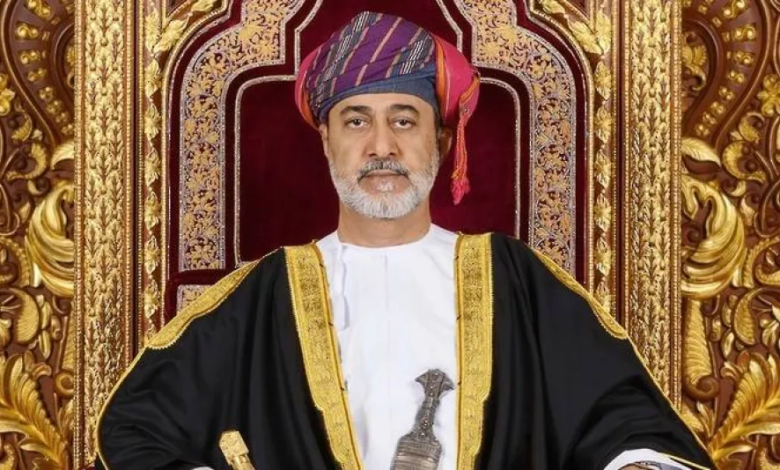
The Sultan of Oman expresses his displeasure to the Iranian President regarding the attacks

Details of the Omani position on the recent escalation
In a significant diplomatic development reflecting the Sultanate of Oman's commitment to regional stability, His Majesty Sultan Haitham bin Tariq, Sultan of Oman, contacted the Iranian President, expressing his deep dismay at the recent attacks and the military escalation in the Middle East. This firm Omani stance comes at a time of growing concern that the region could slide into a wider, potentially uncontrollable regional conflict, threatening international peace and security.
The historical role of the Sultanate of Oman in regional mediation
Historically, the Sultanate of Oman has been known for its balanced and wise foreign policy, established by the late Sultan Qaboos bin Said and continued by Sultan Haitham bin Tariq. Muscat has consistently played the role of a trusted “peace mediator” in numerous complex regional and international crises. Omani diplomacy is based on the principles of positive neutrality, non-interference in the internal affairs of states, and prioritizing dialogue and negotiation over force. This role was clearly demonstrated by Oman’s hosting of the secret negotiations that paved the way for the 2015 Iranian nuclear agreement, as well as its ongoing efforts to find peaceful solutions to the various crises in the region.
The importance of Omani-Iranian relations in de-escalation
The Sultanate of Oman enjoys strong and historic bilateral relations with the Islamic Republic of Iran, relations built on mutual respect and shared interests, particularly concerning the security of navigation in the strategic Strait of Hormuz. This positive relationship gives the Omani leadership a unique platform to send frank and direct messages to the Iranian leadership, including expressing displeasure with any actions or attacks that could lead to instability. Muscat's ability to communicate transparently with Tehran is a regional safety valve upon which many Western and Arab powers rely to de-escalate ongoing tensions.
Regional and international repercussions of the current tensions
This diplomatic move is of paramount importance both regionally and internationally. Regionally, the Middle East is experiencing unprecedented turmoil, with armed conflicts continuing and clashes expanding to encompass multiple fronts. Any further escalation or retaliatory attacks could have catastrophic consequences for the infrastructure and economies of neighboring countries. Internationally, the stability of this region is vital to ensuring the security of global energy supplies, as a significant portion of oil and gas trade passes through the waterways bordering Oman and Iran.
Oman's vision for the future of stability in the Middle East
In conclusion, the Sultan of Oman's message to the Iranian President reaffirms the Sultanate's unwavering stance against military escalation and its call for restraint and recourse to diplomatic channels to resolve disputes. The international community views Oman's efforts with great appreciation, hoping that these endeavors will succeed in defusing the crisis and sparing the region the horrors of new wars. Thanks to its pragmatic policies, Muscat remains a cornerstone of any efforts aimed at establishing a comprehensive and lasting peace in the Middle East and protecting the region's peoples from the devastating consequences of conflict.