
Widening gap between futures contracts and actual prices
The global energy market is undergoing radical transformations as the gap widens between crude oil futures prices and actual supply, which determines the true costs borne by consumers. This sharp divergence comes three weeks after the outbreak of geopolitical tensions and conflict with Iran, casting a long shadow over the stability of global markets and supply chains.
Amid this crisis, the price of Brent crude, the global benchmark, surged by more than 50% to nearly $112 a barrel. This meteoric rise is attributed to supply constraints resulting from the near-total closure of the Strait of Hormuz, coupled with repeated attacks on vital energy facilities in the Middle East. However, the physical cost per barrel is rising at a much faster rate than paper contracts, as the supply shortage is driving prices of refined products used daily by consumers, such as gasoline, diesel, and jet fuel, to unprecedented record highs.
The strategic importance of the Strait of Hormuz and its global impact
Historically, the Strait of Hormuz is the most important artery for global oil trade, with approximately 20% to 30% of total global oil consumption passing through it. Any disruption to this strategic waterway would directly paralyze global trade. In this context, Goldman Sachs estimated that around 17 million barrels per day of oil flows through the Arabian Gulf could be directly affected by this conflict, creating a massive supply shock in the markets.
The International Energy Agency has described this situation as the biggest disruption to oil supplies ever, warning of widespread economic repercussions for countries dependent on energy imports.
The repercussions of the crisis on the aviation sector and consumers
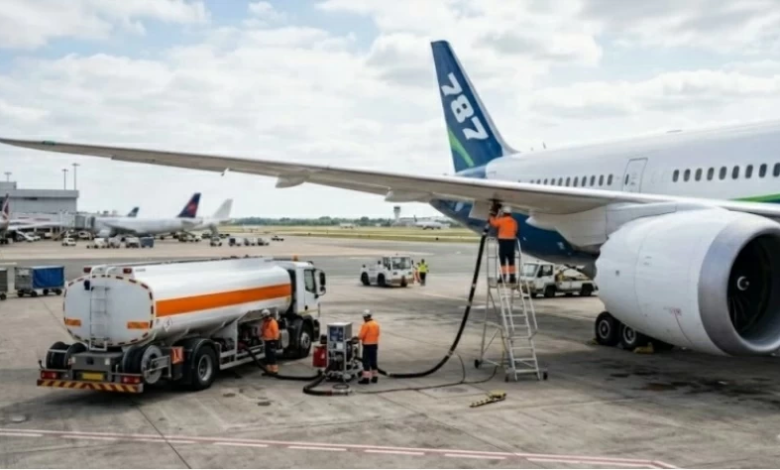
With jet fuel prices exceeding $200 a barrel, the global aviation sector faces severe challenges, adding to its efforts to recover from the crises of recent years. Major European airlines have announced that passengers will bear these additional costs directly through higher ticket prices, according to specialized news websites.
Pavel Kvitin, CEO of one of Europe's largest transport companies, illustrated the extent of the problem: "Movements in the energy markets are reflected in our operating costs almost immediately." He pointed out that fuel accounts for about 30% of the company's total transport costs, meaning these increases will inevitably be passed on to the prices of goods and services, fueling global inflation.
Experts' predictions: Will we return to the record numbers of 2008?
Major financial institutions such as Goldman Sachs and Citigroup warned this week that if the conflict continues, futures prices could reach new record highs in the coming weeks. Forecasts suggest they could surpass the historic level of $147.50 per barrel, reached during the global financial crisis in 2008. It is unusual in energy markets for actual commodity prices and futures prices to remain divergent for such extended periods.
In a detailed analysis of the scene, Jeff Currie, head of energy pathways strategies at a specialist firm, said: “If you look at the paper markets, they have become completely detached from the physical markets. We are currently dealing with a massive supply shock.”.
For her part, analyst Helima Croft, in a research note, ruled out any imminent solutions, stating, "We see little sign of a breakthrough in the escalating energy crisis as more energy facilities come under attack." She added that officials have spent countless hours trying to convince market participants that this disruption will be short-lived as the war nears its end, but current data suggests that the conflict will not be limited at this stage.