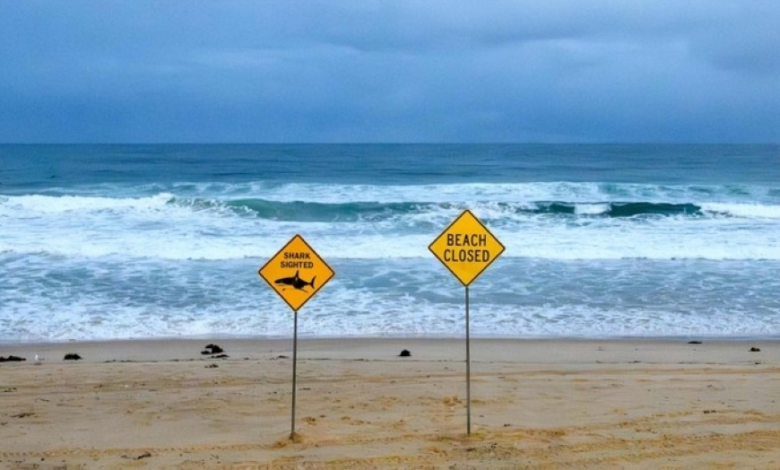

In an urgent move to protect lives, Australian authorities have announced a complete closure of beaches in the Northern Beaches area, north of Sydney, following a series of alarming shark attacks. These attacks have left three people injured, including beachgoers and surfers, prompting the activation of maximum emergency protocols to ensure public safety in one of Australia's most popular tourist destinations.
Unprecedented measures and intensive monitoring
Commenting on these developments, Steve Pearce, CEO of New South Wales Coastguard Service, stated that the frequency of these incidents in such a short period was "unprecedented" in the modern history of the Sydney area. Pearce noted that authorities had not only implemented closures and warnings, but had also deployed a sophisticated surveillance arsenal, including reinforcing beaches with protective nets, using specialized binoculars for precise monitoring, and deploying remotely piloted boats and drones to scan the waters and detect any potential shark activity in shallow areas.
Environmental factors and the impact of heavy rainfall
Regarding the scientific and environmental reasons behind this dangerous approach by predatory fish, experts explained that recent climatic conditions played a crucial role. Sydney experienced a wave of heavy rainfall coinciding with a significant rise in water temperatures. This combination led to a massive influx of fresh water and sediment into the sea, causing turbidity and mixing of water at the estuaries. It is scientifically known that these conditions attract certain types of sharks that exploit the turbid water for hunting, prompting them to approach unusually close to coastal areas frequented by swimmers.
Government warnings and general context
For his part, Chris Minns, Premier of New South Wales, stressed the need for strict adherence to the ban, emphasizing the importance of avoiding swimming or any water activities at the closed beaches until further notice. This incident highlights the ongoing challenges Australia faces in balancing the conservation of marine wildlife with ensuring the safety of beachgoers. While Australia is a world leader in developing early warning technologies for shark attacks, climate and environmental changes present new challenges that require constant vigilance.