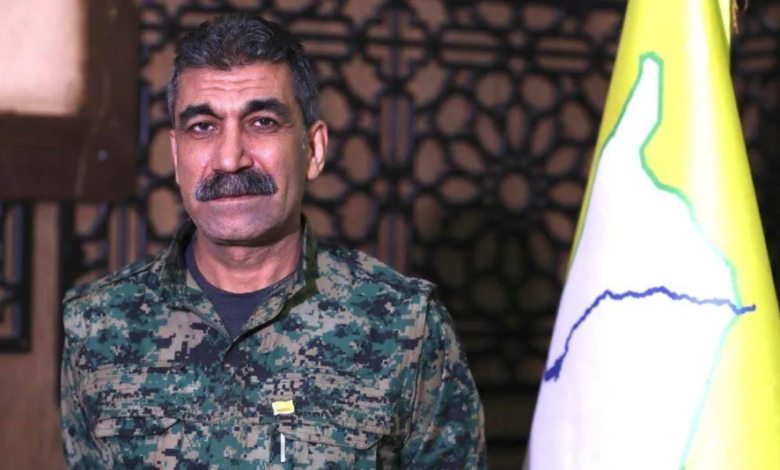
The commander of the Kurdish units was appointed as deputy minister of defense in Syria

Introduction: A strategic shift in the Syrian landscape
In a politically and militarily significant move, reports have emerged of a decision to appoint the commander of the Kurdish units as Deputy Minister of Defense for the Eastern Regions of Syria. This notable development represents a pivotal turning point in the Syrian crisis, opening the door to a new phase of understandings between the central government in Damascus and the Autonomous Administration of North and East Syria, reflecting a desire to unify military and security efforts under a single national umbrella.
General context and historical background of the event
Since the outbreak of the Syrian crisis in 2011, the eastern and northeastern regions of Syria have witnessed rapid developments on the ground. The Kurdish People's Protection Units (YPG), which later formed the backbone of the Syrian Democratic Forces (SDF), emerged as a major military force in the region, supported by the US-led international coalition in the war against ISIS. Over the past years, numerous rounds of negotiations, sponsored by Russia, have taken place with the aim of integrating these forces into the Syrian army and restoring state institutions to the areas controlled by the Autonomous Administration. The appointment of the Kurdish commander to this high-ranking position represents the culmination of a long process of security and political dialogues aimed at ending the fragmentation of the region.
The importance of the event and its expected impact at the local level
Domestically, this decision holds immense strategic importance. It paves the way for ending the military division in Syria and strengthens the Syrian state's sovereignty over all its territory, particularly in the governorates of Hasakah, Raqqa, and Deir ez-Zor. These governorates are considered the country's economic powerhouse due to their oil and gas reserves and strategic crops such as wheat and cotton. Integrating Kurdish forces into the Syrian army will reduce the likelihood of internal conflict and provide legal and military protection for Kurdish fighters within the official state structure, thus contributing to greater stability and civil peace in these ethnically and tribally diverse regions.
Regional repercussions: Turkey's stance and border tensions
Regionally, this development is highly sensitive, particularly for Turkey. Ankara classifies the Kurdish units as an extension of the Kurdistan Workers' Party (PKK) and considers them a threat to its national security. Turkey has long conducted military operations in northern Syria to prevent the expansion of Kurdish influence. This appointment is expected to provoke Ankara, but at the same time, it may remove Turkey's pretext for military intervention, given that these forces have become an official part of the Syrian Ministry of Defense. This would place any targeting of them within the category of a direct attack on a sovereign state, requiring new understandings, perhaps under Russian and Iranian auspices within the Astana process.
International influence: Russia and the United States
Internationally, this development represents a victory for Russian diplomacy, which has worked diligently to bridge the gap between Damascus and Qamishli, aiming to reduce foreign influence east of the Euphrates. Conversely, this development presents the United States with a complex situation; Washington, which has supported Kurdish forces for years, may find its allies integrated into Syrian government institutions. This could lead Washington to reassess its military presence in Syria and perhaps accelerate its withdrawal if a comprehensive settlement is reached that guarantees security and stability in the region and prevents the resurgence of extremist groups.
Summary of the scene
The appointment of the Kurdish units' commander as deputy defense minister for eastern regions is not merely an administrative or military change, but a geopolitical move that redraws the map of alliances and control in Syria. This path represents a genuine opportunity to unify the country and overcome the wounds of war, despite the regional and international challenges that may hinder its full implementation on the ground.