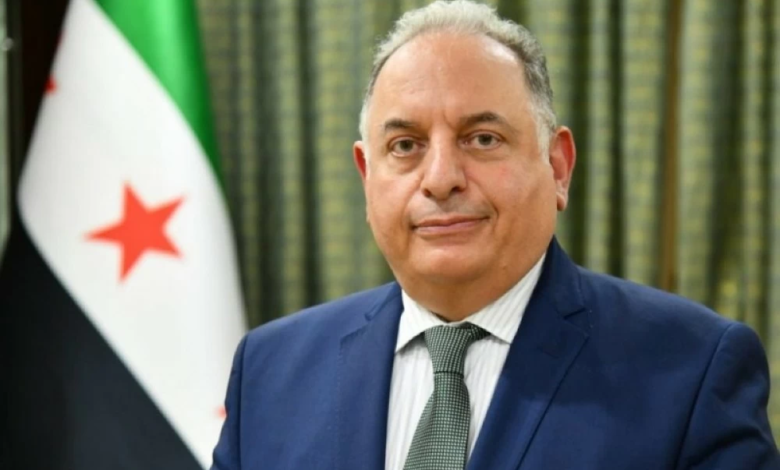
Syrian Finance Minister Mohammed Barnieh announced a radical shift in the country's fiscal policy, revealing that the estimated spending in the 2026 budget will more than triple compared to spending levels in 2025. This announcement comes as the Syrian government seeks to deal with serious economic challenges that have accumulated over more than a decade of war.
Spending priorities: Infrastructure and oil
In an exclusive interview with Al Arabiya Business, Minister Barnieh explained that this significant budget increase is not a luxury, but a pressing necessity dictated by the urgent need to rehabilitate dilapidated infrastructure, repair oil facilities severely damaged in recent years, and provide essential services to newly liberated areas. The minister explicitly stated that "the liberated areas in Syria require hundreds of millions of dollars" to return to normalcy and productivity.
The return of the "Syrian Jazeera": The lung of the economy
In analyzing the economic implications of this decision, Barnieh emphasized that the return of the Syrian Jazeera region (northeast Syria) to state control will have a significant positive impact in the medium and long term. This region holds paramount strategic importance as it is considered Syria's breadbasket and its oil reservoir, containing most of the country's oil and gas fields and fertile agricultural land suitable for wheat cultivation. Reintegrating these resources into the national economy will reduce the enormous import bill for petroleum products and grains, thus supporting the stability of the local currency in the future, despite the substantial initial costs of its reconstruction.
Self-reliance, independent of international institutions
Regarding funding sources, the finance minister ruled out borrowing from the International Monetary Fund or the World Bank this year. This statement reflects the reality of financial isolation and economic sanctions imposed on Damascus, forcing the government to rely on its own resources, tax collection, and perhaps support from political allies, rather than Western financial institutions.
3D strategy
The minister concluded his remarks by outlining the Ministry of Finance's new strategy, which rests on three main priorities: strict discipline in managing public funds to reduce waste, supporting and developing the financial sector to enable it to finance projects, and stimulating economic development to create jobs and boost production. These steps are an attempt to lift the Syrian economy out of the recession and inflation that Syrian citizens are experiencing daily.